Ellis Subsurface Engineering Lab · University of Michigan
Our research bridges geoscience and environmental engineering to decarbonize energy systems — from locking CO₂ safely underground to unlocking clean geologic hydrogen. We build the physical and chemical understanding needed for a net-zero world.
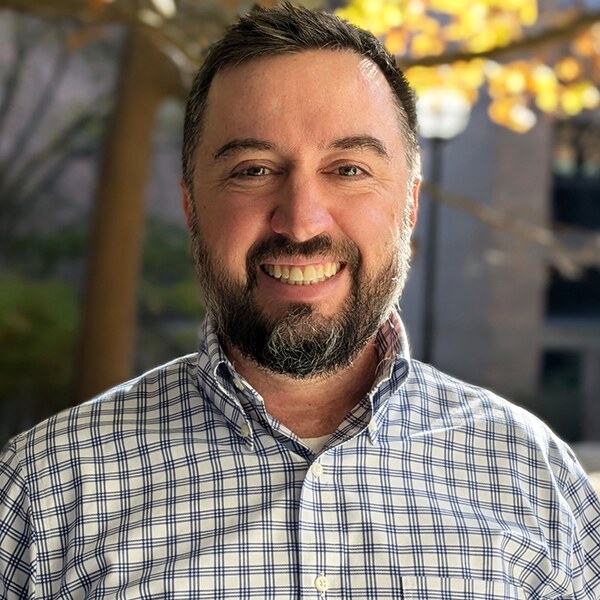
Associate Professor · University of Michigan
Associate Professor & Division Chair, Environmental and Water Resources Engineering
Department of Civil & Environmental Engineering · University of Michigan, Ann Arbor
My research focuses on engineered subsurface systems including geologic carbon storage, geothermal energy production, geologic hydrogen, biomineralization-based permeability control, and water quality in the context of energy development. I received my Ph.D. from Princeton University in 2012 and first joined Michigan as a Michigan Society of Fellows Postdoctoral Scholar and then as a tenure-track faculty member in 2014. I am an NSF CAREER awardee, co-Director of the U-M MI Hydrogen Initiative, and currently serve as Division Chair for Environmental and Water Resources Engineering.
Education
Ph.D., Civil & Environmental Engineering
Princeton University
Advisor: Dr. Catherine A. Peters · Thesis: Geologic Carbon Sequestration in Deep Saline Aquifers: Brine Acidification and Geochemical Alterations of Reactive Leakage Pathways
M.A., Civil & Environmental Engineering
Princeton University
B.S. with High Distinction, Geological Sciences (Honors)
University of Michigan, Ann Arbor
B.S. with High Distinction, Economics
University of Michigan, Ann Arbor
Awards & Honors
What's Happening
January 2026
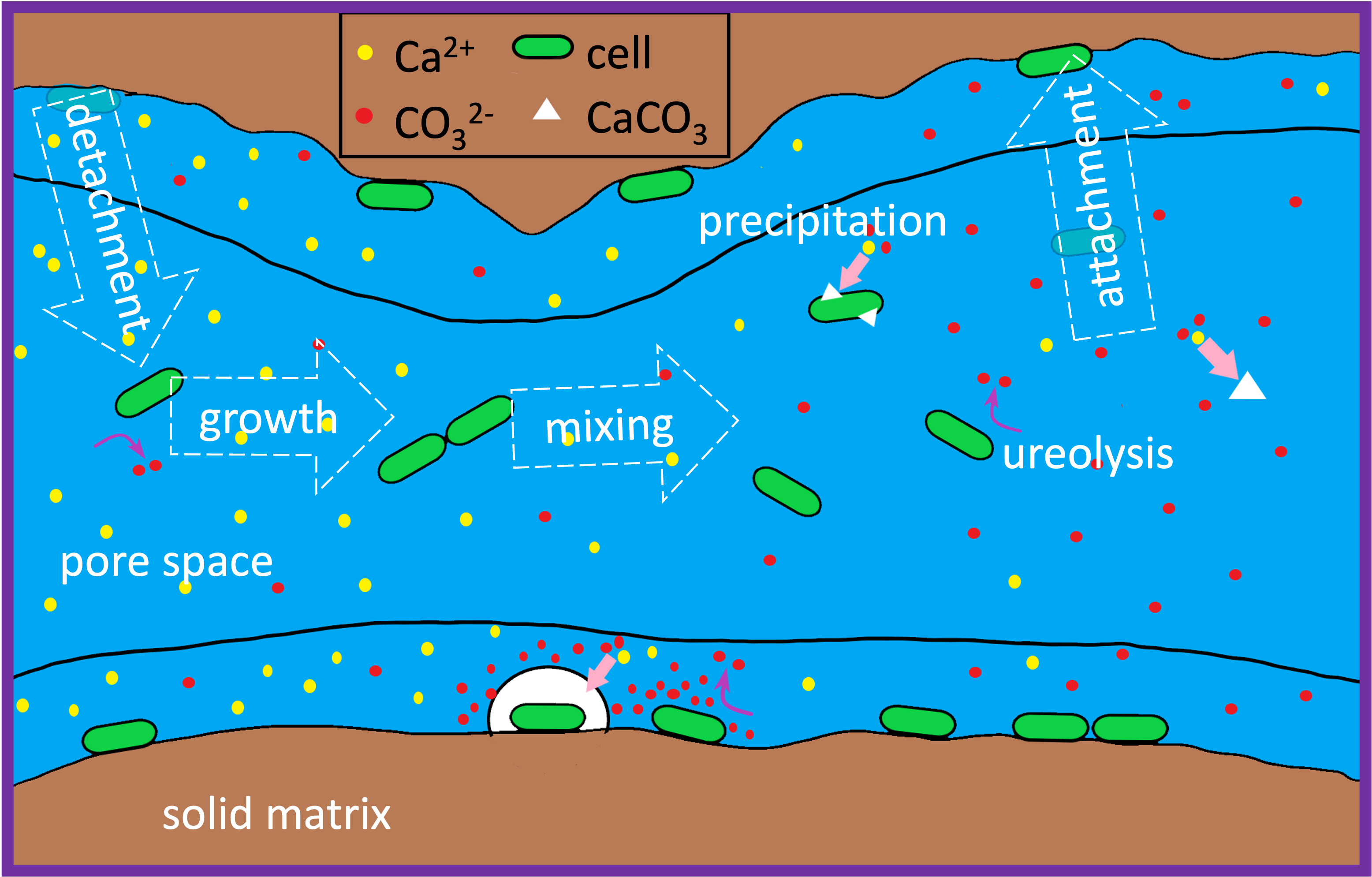
Clay content mediates microbial mineralization in sandstones
A new study from the Ellis lab shows that clay minerals play a previously underappreciated role in controlling how suspended Sporosarcina pasteurii bacteria drive calcite precipitation in porous rock — with direct implications for biogrouting and CO₂ storage site integrity.
Read in Water Resources Research →December 2025
CEE Spotlight features Ellis lab CO₂ storage research
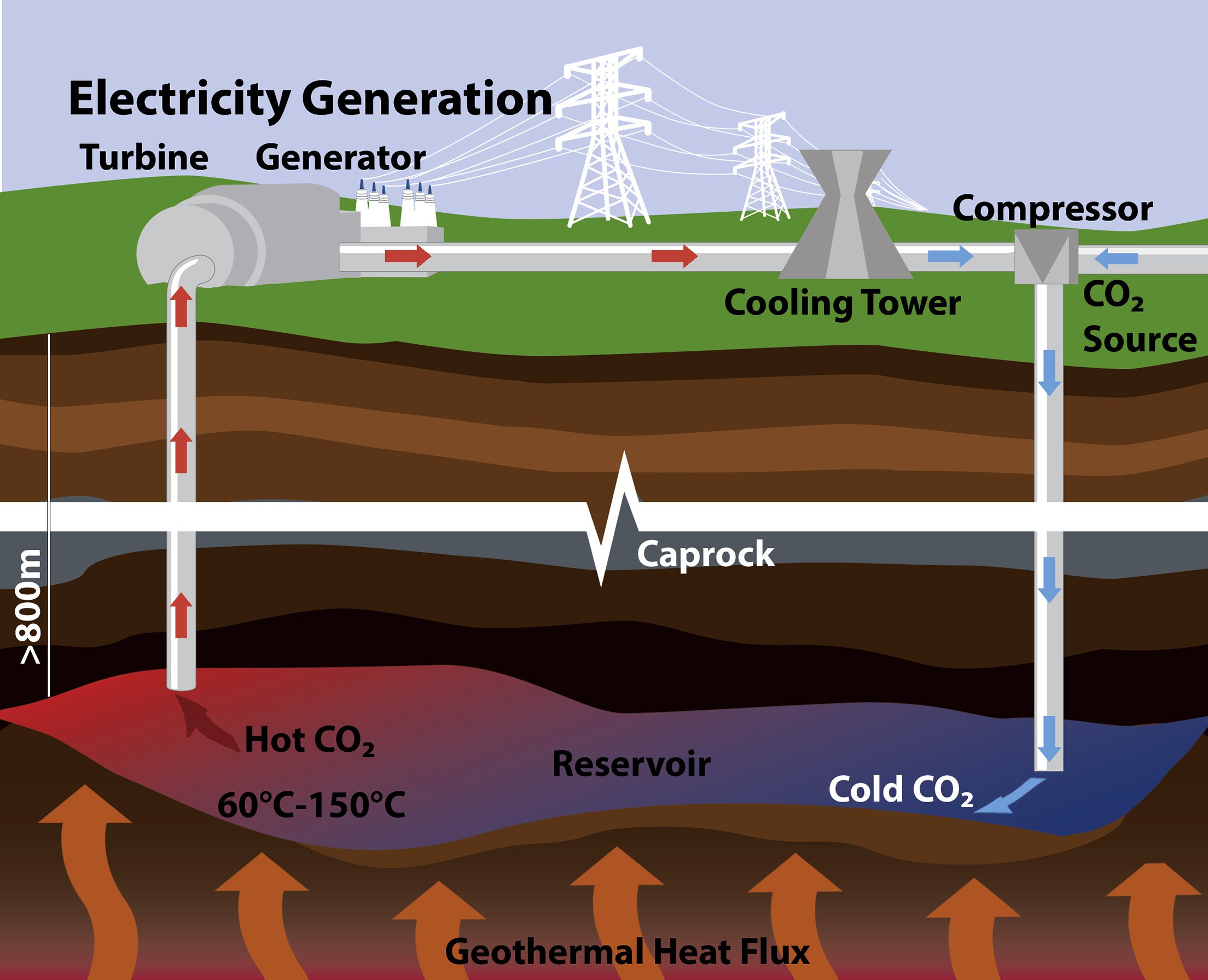
The Michigan College of Engineering's CEE spotlight highlighted our work on carbon-negative subsurface energy systems, including geologic carbon sequestration and CO₂-enabled geothermal power generation — research with potential to decarbonize the energy sector at scale.
Visit CEE News →2025
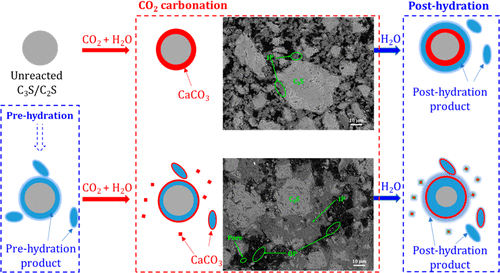
CO₂ curing of bendable concrete validated at pilot scale
A multi-institution team including the Ellis lab demonstrated pilot-scale carbonation curing of Engineered Cementitious Composite (ECC) railroad ties — showing that CO₂ can simultaneously strengthen concrete and be permanently sequestered in infrastructure materials.
Read in Journal of Cleaner Production →Ongoing
Co-directing the U-M MI Hydrogen Initiative
Ellis serves as co-Director of the University of Michigan MI Hydrogen Initiative, a university-wide effort to advance geologic and clean hydrogen research — positioning Michigan as a national hub for hydrogen energy science and policy.
Learn about MI Hydrogen →What We Work On
Carbon-Negative Subsurface Energy
Meeting climate targets requires not just reducing emissions but actively removing CO₂ from the atmosphere. We develop subsurface energy technologies that achieve net-negative emissions — including geologic carbon sequestration in deep saline aquifers, CO₂ mineral trapping in fractured basalts, and CO₂-enabled geothermal power generation.
🏆 NSF CAREER Award · Sloan Foundation
CO₂ Utilization in Infrastructure
What if concrete could remove carbon while becoming stronger? We harness CO₂ as a reactive curing agent for Engineered Cementitious Composites (ECC) — producing tougher, more durable infrastructure materials while permanently sequestering carbon. Pilot-scale validation of bendable concrete railroad ties has demonstrated industrial feasibility.
🏭 DOE-NETL · Pilot Scale Validated
Biomineralization in Porous Media
Microbes can seal fractures, reinforce soils, and control fluid flow underground — if we understand them well enough. We investigate microbially-induced calcite precipitation (MICP) for controlled permeability modification in subsurface systems, combining synchrotron X-ray imaging, reactive transport modeling, and microfluidic rock experiments.
🔬 Synchrotron Imaging · Pore-Scale Models
Energy-Water Nexus & Shale Gas
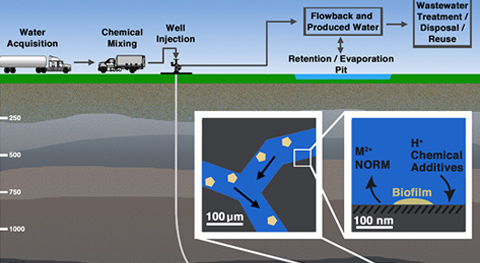
Energy development places enormous pressure on water resources. We examine water quality impacts of unconventional energy development — including mobilization of radionuclides and trace metals during hydraulic fracturing — and develop sustainable wastewater management strategies for produced water from oil and gas operations.
💧 Hydraulic Fracturing · Produced Water Management
Geologic Hydrogen
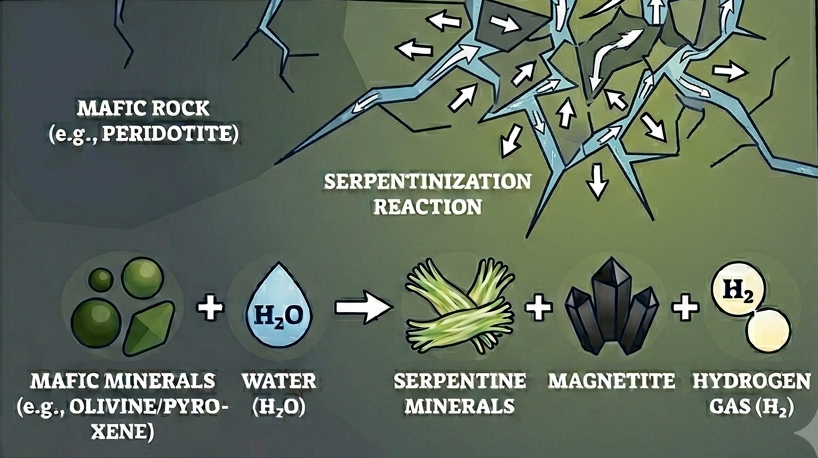
The earth's mantle produces hydrogen through serpentinization — a natural rock-water reaction that offers a potentially vast, clean fuel source. We investigate stimulated production of geologic hydrogen, including the subsurface chemistry, flow dynamics, and engineering controls needed to harness this resource. Ellis co-directs the U-M MI Hydrogen Initiative.
⚡ U-M MI Hydrogen Initiative
Materials Imaging & Characterization
Understanding how minerals, pores, and reactive fluids interact at the microscale requires advanced imaging and quantitative analysis. We apply synchrotron X-ray tomography, micro-CT, and image processing to characterize evolving pore structures, mineral distributions, and reaction fronts in rocks and engineered materials — linking pore-scale observations to continuum-scale behavior.
🔬 Synchrotron X-ray · Micro-CT · Pore-Scale AnalysisScholarly Work · 52 peer-reviewed publications
Clay content mediates the contribution of suspended Sporosarcina Pasteurii to Microbial Mineralization in Sandstones
Water Resources Research, 62, e2025WR040790
Key finding: Clay minerals are a critical — and previously overlooked — regulator of how suspended bacteria drive calcite precipitation in porous rock, with major implications for engineered biogrouting and CO₂ storage site integrity.
Pilot-scale validation of CO₂ utilization for greener and tougher infrastructure through carbonation curing of bendable concrete
Journal of Cleaner Production, 491, 144845
Key finding: CO₂ curing of ECC concrete railroad ties at pilot scale simultaneously increases flexural strength and permanently mineralizes carbon — a validated industrial pathway to carbon-negative construction materials.
Wellbore Integrity in Energy Applications: Precipitation Products After Reaction with Produced Water from the Permian Basin
Environmental Engineering Science, 42 (10), 434–444
Hydrodynamic limitations of biomineralization-induced permeability reduction
ACS Earth and Space Chemistry, 8 (3), 575–585
Key finding: Fluid velocity sets a fundamental ceiling on how much pore-clogging bacteria can achieve — identifying a key design constraint for any application using microbes to seal subsurface formations.
Life cycle greenhouse gas emissions of CO₂-enabled sedimentary basin geothermal
Environmental Science and Technology, 58 (4), 1882–1893
Microwave-based CO₂ desorption for enhanced direct air capture: Experimental validation and techno-economic perspectives
Environmental Research Letters, 19, 034002
The promise of coupling geologic CO₂ storage with sedimentary basin geothermal power generation
iScience, 26 (2), 105618
Key finding: Pairing geologic CO₂ storage with geothermal power generation can produce electricity with strongly negative lifecycle emissions — turning a carbon disposal problem into an energy asset.
Persistent homology as a heterogeneity metric for predicting pore size change in dissolving carbonates
Water Resources Research, 59 (9), e2023WR034559
DOI →Reducing user bias in X-ray computed tomography-derived rock parameters through image filtering
Transport in Porous Media, 140, 493–509
Key finding: Systematic image filtering of micro-CT data substantially reduces operator-dependent variability in computed rock properties such as porosity and permeability — a critical methodological advance for reproducible pore-scale characterization.
DOI →Permanent CO₂ trapping through localized and chemical gradient-driven basalt carbonation
Environmental Science & Technology, 52 (15), 8954–8964
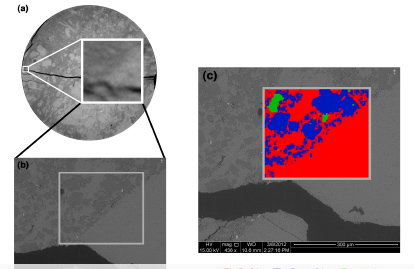
Key finding: Post-reaction micro-CT and SEM characterization revealed that carbonates preferentially nucleate in diffusion-limited vesicles and dead-end fractures in basalt — demonstrating how chemical gradients drive localized, permanent CO₂ mineral trapping.
DOI →Forensic estimates of lead release from lead service lines during the water crisis in Flint, Michigan
Environmental Science and Technology Letters, 4, 356–361
Key finding: Forensic analysis revealed that lead service lines released orders of magnitude more lead during Flint's water crisis than prior estimates — findings that shaped the federal response and future lead pipe replacement policy.
3D calcite mapping and a demonstration of its relevance to permeability evolution in reactive fractures
Advances in Water Resources, 95, 246–253
DOI →Dissolution-driven permeability reduction of a fractured carbonate caprock
Environmental Engineering Science, 30 (4), 187–193 (Featured Article)
Key finding: CO₂-acidified brine dissolves carbonate caprocks along fractures, but re-precipitation of dissolution products can partially re-seal pathways — a surprising self-healing mechanism with implications for long-term storage security.
Full list of 52 peer-reviewed publications on Google Scholar.
Lab Members
🔬Eva Albalghiti
Postdoctoral Researcher
AI-assisted GeoH2 Prospect Mapping
2026 – present
🔗 LinkedIn
🎓Phillip Chacon
Ph.D. Candidate
Engineered Production of Geological Hydrogen
Expected 2028
🔗 LinkedIn
📚Martin Tan
M.S.E. Student
Underground Hydrogen Storage Leakage Risk Assessment
2025 – present
🔗 LinkedInWhere They Are Now
Ph.D. — Primary Advisor
Ph.D. — Co-Advisor
Postdoctoral Alumni
M.S.E. — Advised
M.S.E. — Co-Advised
Undergraduate Researchers
Ellis Subsurface Engineering Lab
Outreach & Visibility
Press & Media
CEE Spotlight: Carbon-Negative Subsurface Energy Research
Michigan College of Engineering · December 2025
Pilot-scale CO₂ concrete curing covered by clean energy press
Coverage of Journal of Cleaner Production paper · 2025
Flint Water Crisis lead contamination research cited in national policy
Widely covered in national media & cited in EPA rulemaking · 2017
University of Michigan MI Hydrogen Initiative Launch
U-M Research News · Ongoing
Selected Invited Lectures & Panels
US Frontiers of Engineering Symposium
National Academy of Engineering · 2018
Arab American Frontiers Symposium (Invited Speaker)
National Academies of Science · 2014
ASCE ExCEED Teaching Fellowship
American Society of Civil Engineers · 2015
For a complete list of presentations and invited talks, see the full CV
Get In Touch
I welcome inquiries from prospective graduate students, postdoctoral researchers, and collaborators interested in subsurface energy systems, carbon management, or environmental engineering. The best way to reach me is by email — please include a brief description of your background and research interests.
Full details on education, appointments, funded research, teaching, and student mentoring.