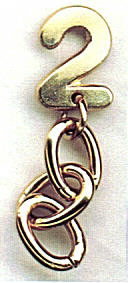
 Wear
A Jubilee 2000 Label Chain......
Wear
A Jubilee 2000 Label Chain......
Wear
A Jubilee 2000 Label Chain......
....in solidarity with the African, Asian and Latin American nations that each year spend up to four times more to pay on their debts than on education, health and nurtuition, while hundreds of millions live without basic health care, food or safe water. Help Spread the Word! Give one to your friend or an elected official. Lapel chains are available for $3 from the Interfaith Council for Peace & Justice office, 730 Tappan. (663-1870). They will also be on sale at this year Washtenaw County CROP Hunger Walk
The Chains of Third World Debt - An International, Interfaith Concern

Few issues so join the hearts of people of all faiths as do those of human hunger. We all sorrow that so many of our brothers and sisters are malnourished or starving--hungry and hopeless. We all know that this is not right!
Increasingly, people all over the world and of many faiths are focusing now on the relationship of the heavy burden of debt on 3rd world nations to the pressing human needs of their people. Over the last 30 years, many of the world’s poorest nations have incurred massive debts that can never be repaid. The reasons are many: corrupt governments and officials, over-eager lending institutions, Western banks glutted with revenues from high oil prices, military buildups, overly grand government schemes, global recessions. But whatever the causes, today the burden of repayment rests most heavily on the poor who never benefitted from the loans in the first place As the rich countries, the World Bank, and International Monetary Fund try to collect the debts, their demands for "restructuring" most often work to increase the suffering of the poor.
The problem is not so much the size of trhe debt as the hugh share of a country’s income it gobbles up. In sub-Saharan Africa, governments owe foreign creditors an average of almost $400 for every man, woman and child--more than most Africans can earn in a year. Debt repayments leave very little for the much-needed poverty reduction programs and spending. In Tanzaniea, for every dollar spent on debt, only a quarter is spent on health care. The neglect is catastrophic. Last year the annual debt service obligation on Mozambique was more than half its total annual revenue. Payments are made at the expense of investing in education, sanitation, immunization, agriculture development, and other basic needs.
Around the world, religious and other non-governmental organizations have joined in a rising chorus to say that the only answer lies in the forgiveness of these debts, combined with a careful program to see that the benefits then reach the people most needing them. Here are some key examples:
 Jubilee
2000 is a worldwide response involving people and institutions from
all the great world faith groups. As the All-Africa Council of Churches
puts it, "Every child in Africa is born with a financial burden which
a lifetime’s work cannot repay. The debt is a new form of slavery as vicious
as the slave trade."Inspired by the Biblical vision of Jubilee, faith-based,
environmental, grassroots development and economic justice groups around
the world are working together toward the cancellation of the unpayable
debts of world’s most impoverished nations. The plea is "Help us
break the chains of debt!"
Jubilee
2000 is a worldwide response involving people and institutions from
all the great world faith groups. As the All-Africa Council of Churches
puts it, "Every child in Africa is born with a financial burden which
a lifetime’s work cannot repay. The debt is a new form of slavery as vicious
as the slave trade."Inspired by the Biblical vision of Jubilee, faith-based,
environmental, grassroots development and economic justice groups around
the world are working together toward the cancellation of the unpayable
debts of world’s most impoverished nations. The plea is "Help us
break the chains of debt!"
 Bread
for the World’s 1999 Offering of Letters picks up this theme: Proclaim
Jubilee--Break the Chains of Debt. BFW has recruited congressional
respresentatives as sponsors for a bill, (H.R.1095--Debt Relief For Poverty
Reduction Act) and is enlisting thousands of churches in letter writing
campaigns to support the bill. A Senate version should be introduced this
fall.
Bread
for the World’s 1999 Offering of Letters picks up this theme: Proclaim
Jubilee--Break the Chains of Debt. BFW has recruited congressional
respresentatives as sponsors for a bill, (H.R.1095--Debt Relief For Poverty
Reduction Act) and is enlisting thousands of churches in letter writing
campaigns to support the bill. A Senate version should be introduced this
fall.
 Church
World Service has published Africa: In Bondage to Debt and
related study materials to go along with their hunger relief and development
programs.
Church
World Service has published Africa: In Bondage to Debt and
related study materials to go along with their hunger relief and development
programs.
In our area a 3rd World Debt Coalition has been formed by a number of church and labor groups from Michigan and upper Ohio. Their mission: "In the spirit of solidarity, our mission is to educate and challenge people to build a just world and free the poorest countries from the burden of crushing debt." Barbara Pott of Catholic Social Services (971 9781) is the contact person.
This year the educational thrust for the 25th Annual Washtenaw County CROP Hunger Walk will bring this issue to the fore. At each of our rest stops and at the closing fellowship hour, educational displays will point to aspect of the issue and walkers will have a chance to join in letter writing and other forms of action.