
Theatre
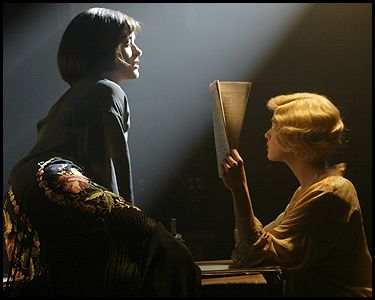
The effects of theatre shine vibrantly in the movie entitled Chicago.
Brilliant acting on Renee Zellwegger and Catherine Zeta-Jones’s behalves
allow the audience to become part of the scene. Characters in this movie
tend to step away from reality in order to transfix themselves in a dreamlike
state of mind. Doing this allows them to pull away from the everyday
monotony and drag of factory work; in the case with this movie, however, the
characters try to disassociate themselves with the prison scene in order to
explore the dreamy theatre background.
This transition from reality to aspiration is a general mentality that the
people of Chicago wished to explore. Such is the case with Sister
Carrie, where Carrie wishes to divert from the rather bleak hours spent at
factory jobs in order to partake in the theater. In Chicago, Roxie (Renee
Zellwegger) gathers her lowly background where she is uninterested with the
drone of day-to-day affairs. In exchange, she builds her self-esteem
by slipping into dreams and exploring what alternatives she has at hand.
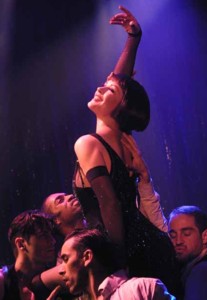
This concept of slipping away also pertains to the Great Depression and the
ways in which people would not allow themselves to become completely stricken
with grief after such a loss. Theatre, like the movies, allowed the
people of Chicago to gather their thoughts on matters besides the loss of
mass amounts of money in the stock market.
Chicago also explores on the notion of bringing people together from various
racial and ethnic upbringings in order to find some common ground together.
In other words, a variety of people migrated to Chicago in the hopes of finding
economic prosperity and inevitably find a completely different world within
theatre. In Chicago, the audience discovers that the inmates come
from a diverse background, as is the case in the “Jailhouse Tango.”
These characters (in their dream-like state of mind) find common association
with one another, as they have similar lifestyles and essentially want the
same things out of life, but they differ in heritage. This is exactly
what made the amusements of Chicago strive so strongly—people found
a way to explore exciting alternatives while still having different ethnicities.
Music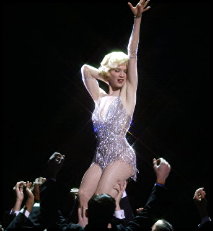
The movie Chicago also gives a glimpse into the shear therapeutic benefits of music for those residing in the city. Much like the effects of theatre on the community, music provided a sense of escape for those looking to step away from the monotony of the day-to-day drone. The scenes in Chicago are compelling in that they present prison in the limelight, making it seem as though it is all quite minor. That is exactly the key to music--it allows people to enter this dreamy world, thus taking them to a more comfortable life that makes reality seem like a breeze.
It should be noted that these songs in the movie take traditional prison songs and makes them into orchestrated works of art worthy of Broadway recognition. This blues-cum-jazz transition is yet more evidence of the shear impact a creative mind can have when one is incarcerated and unable to obtain such luxuries. Jazz itself has quite a history in itself. It essentially paves the path toward future generations of the mainstream genres of music. Additionally, the introduction of jazz to the public simply broke the rules to any previous music that America was once familiar with. According to Maria Carter, "Jazz was different because it broke the rules -- musical and social. It featured improvisation over traditional structure, performer over composer, and black American experience over conventional white sensibilities." Simply put, people were not ready to handle such a turn in social events; nonetheless, jazz was exactly what society was looking for all along.
Chicago displays those elements that jazz created within the popular culture of the 1920s. For instance, as people began to dance to this new form of music, clothing had to be altered to accommodate; as a result, the public witnessed "flappers" wearing skirts with hemlines raised above the knee for the first time (Pick). In the movie, the audience witnesses the protagonists wearing scandalous clothing that would once be considered immoral just a decade before. Additionally, the women are the ones who are stepping out of the box for the first time, and they waste no time expressing that oppressed desire that laid dormant for so long. Chicago accurately conveys the gradual shift from strict moral woman to the new risky woman inspired by jazz.