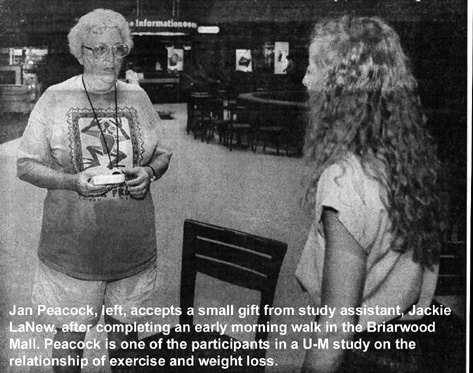
STUDY: Intensity of workout reviewed
What's high intensity walking and what's low varies with each woman. So Borer and her assitsnats determine what each woman's level of aerobic fitness is, then assign her a speed tailored to her capacity. They also adjusy walking rates as women become more fit during the study.
"Three miles per hour may be fast to one, slow to another," Borer expolains.
Borer plans another diabetes-related study using PET scans to measure how specific leg muscles use blood sugar in different types of exercise. She also plans to use data from the study starting this fall and other studies to unravel
the effects of low vs. high intensity exercise on risk factors for heart disease such as blood lipids and blood clotting.
She's only at the threshold of what she expects to be more surprising findings as she examines major risks to women's health through the lens of exercise intensity.
She's not sure about anything yet. Based on her earlier findings, "It looks as if women get the greatest benefits of increased insulin sensitivity at slower speeds. But they get the best benefit at growth hormone secretions at faster speeds, and they 're getting the greatest fat
loss at slower speeds," she says.
But since the jury's still very much out, what should women do? "There are very good studies showing that people over 60 who walk four hours a week significantly decrease their risk of coronary heart disease," Borer says.
But as a scientist, Borer would like for health practitioners to know enough to be much more precise about prescribing the right type and intensity of exercise for people, with an eye to their individual health risks. "We would like to use walking like medication." she says.