Argyll and the Hebrides
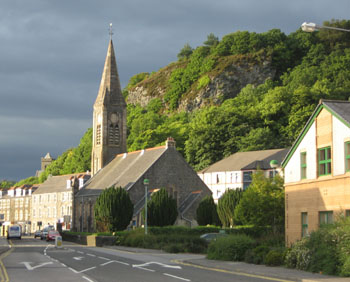
Hear is the scenic Victorian seaside village of Oban, one of the most uptight and narrow minded places in the English speaking world. I am not sure why so many people are rude and closed minded in Oban, it seems like a nice setting and is the main departure point for ferries to the Hebrides Isles such as Mull and Iona.
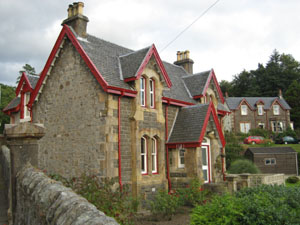
Local Victorian architecture.
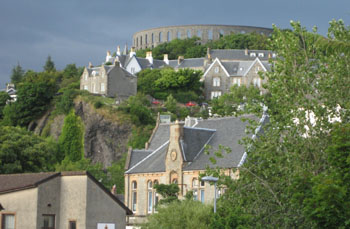
The main local landmark is an ersatz coliseum constructed at the end of the 19th century for a local businessmen named McCaig. McCaig wanted to construct a museum, art gallery, and chapel based on the Roman Coliseum that would also function as a permanent shrine for his family. Unfortunately for his grand plans, he died after only the exterior wall was constructed and the building became known as McCaig’s folly.
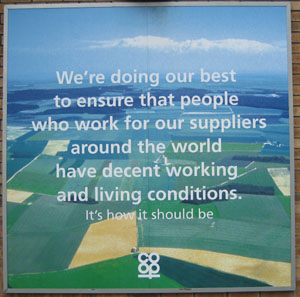
If for some reason you are stuck in Oban, you can find refuge in the local co-op where people are actually friendly. Scotland has a thriving co-op system, we saw a co-op supermarket in just about every sizable town.
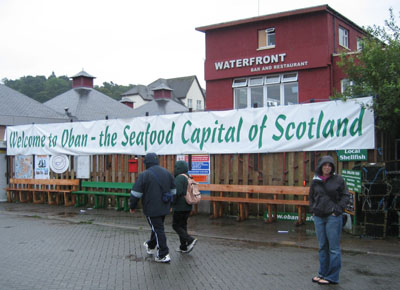
Oban has other assets as well. In a country known for its high quality seafood, Oban is the seafood capital.
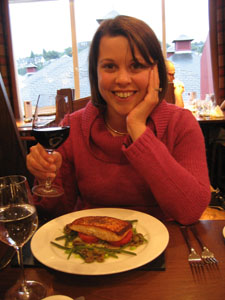
Heather enjoys our night out on the town, wearing her new Scottish sweater.
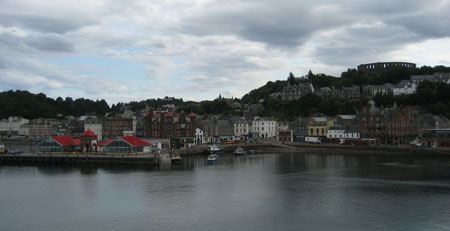
Departing Oban on the Cal-Mac ferry.
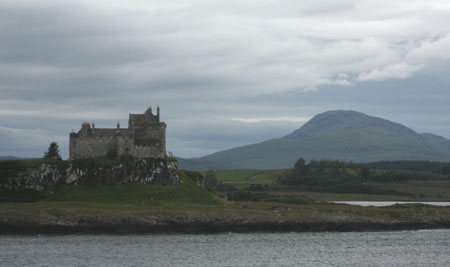
Castle Stalker, built in the 16th Century on a small island between Oban and the Isle of Mull.
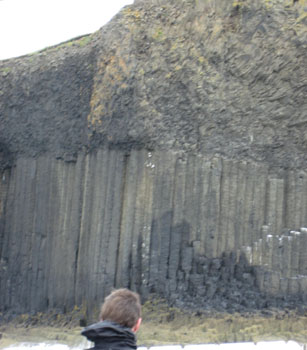
The basalt columns on the Isle of Staffa. The Island given its name, meaning Isle of Pillars, by the Vikings. Legend has it that this was part of the Giant’s Causeway between Scotland and Ireland that was destroyed by rival giants.
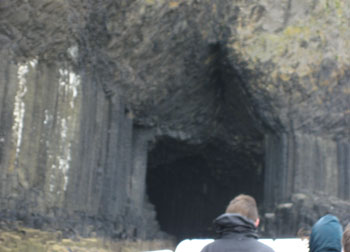
Fingal’s cave. Unfortunately the water was too rough for us to land on the island, so this is the closest that we got.
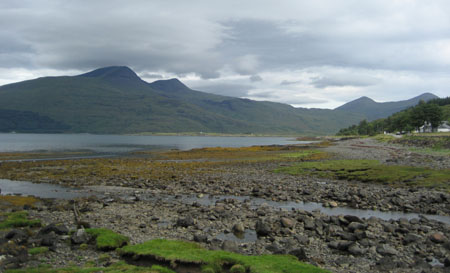
The Isle of Mull. One of the mountains resembles an Egyptian pyramid when viewed from head on.
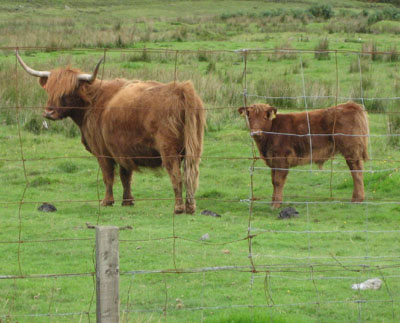
Highland coos (cows).
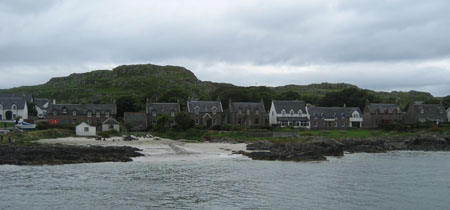
The village of Baile Mor on the Isle of Iona.
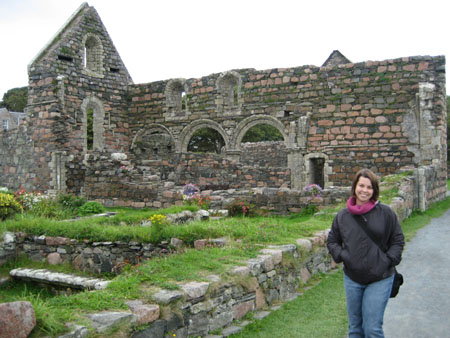
Heather at the ruins of the Augustinian nunnery on the Isle of Iona.
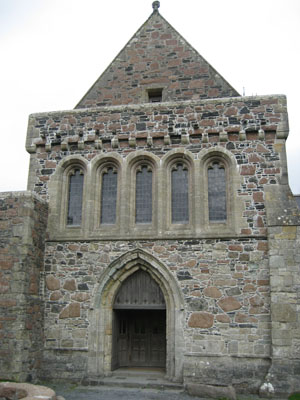
Here is the Iona Abbey, where St. Columba brought Christianity over from Ireland.
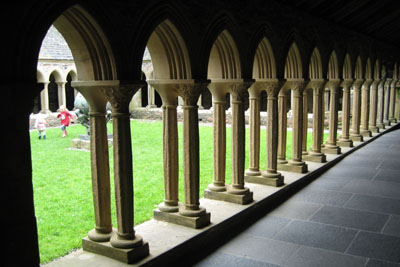
Many of these pillars are modern replacements.
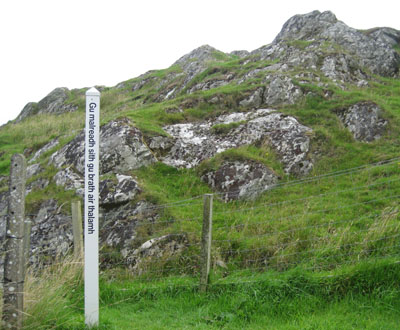
May there be peace on earth.
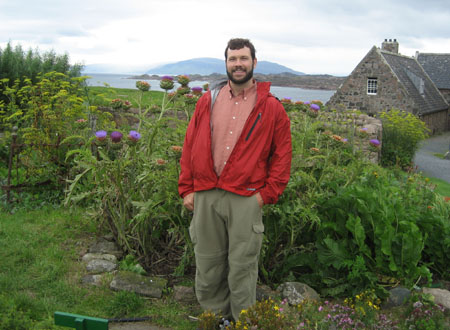
Dan visits the giant thisles in the abbey garden.
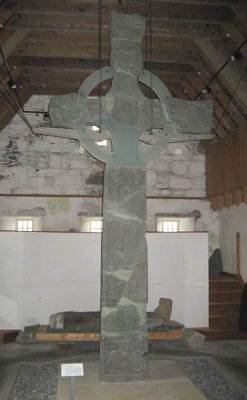
The famous 8th Century St. John’s Cross. The original carvers made the cross’ arms too long, and they kept falling off. Finally, a circular brace was built around the arms to help reinforce the arms. The design caught on and is now widely recognized as a symbol of Celtic Christianity.
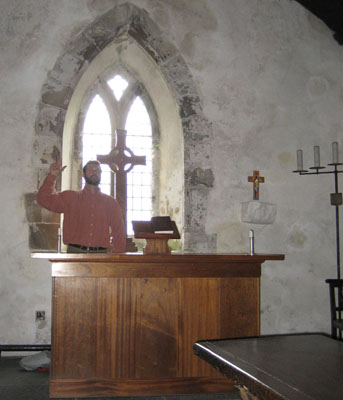
Trying out the facilities.
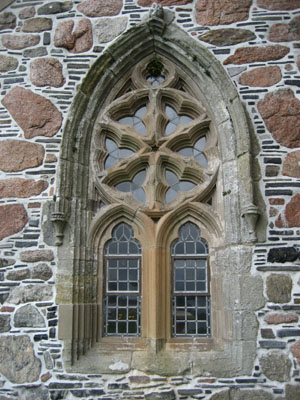
Catholic churches have the remains of saints (relics) installed in the altar. The problem was that this chapel was built hundreds of miles away from any other, and there were no relics of saints to be had in the area. Also, there was a prophecy that some one would have to be sacrificed before the chapel could be completed. So one of the monks agreed to be buried alive in order fulfill the prophecy. They dug him up three days later only to find that he was still alive. He told them that he had been to hell, but it was not that bad. Also, there was no heaven like the one they imagined. He was promptly executed for blasphemy and reinterred
but was later made a saint for giving his life for the cause.
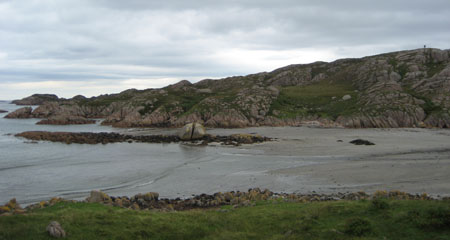
Rocky shores.
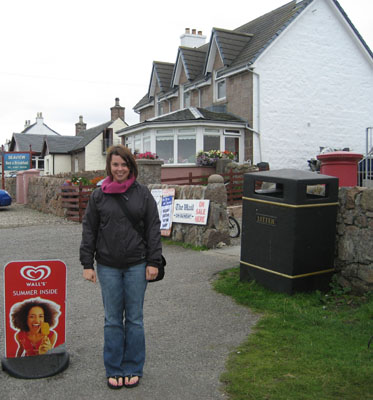
It may be summer inside, but in Scotland even August can be quite chilly- this is why Heather needed the new sweater seen here and in the picture above.
Back to modern civilization
Photo Index