|
FILL OUT THE ATTUCKS
PROFILE
Obituaries |
Henry "Hank" MarshallTaylor Henry loved Indianapolis.
Born in Brightwood to Roy Cooksey Taylor and Myrtle Viola Williams
Taylor Winston, he lived in that neighborhood until 1963. He and his
wife then built their house on the east side of Indianapolis. His
roots ran deep. He graduated from Crispus Attucks High School, as
part of a close-knit class that continues to celebrate their "Class
of ‘50" together. He worked while attending Purdue University
Extension until drafted. After two years in. the U.S. Army, he returned
to Indianapolis and enrolled in Indiana Central College (now University
of Indianapolis). He graduated cum laude with a degree in Secondary
Education. He did his Master's Degree work at Butler University. Mr.
Taylor was proud to return to his high school alma mater to teach
in 1959. He was a born teacher and inspired students to high achievements
for 9 years. He also taught night school and sponsored Key Club, coached
the tennis team, and modeled excellence as his teachers had done for
him. In 1968, he joined the Community Service Council as a Planning
Associate. That was his entree into the community advocacy to which
he devoted himself for the rest of his life. He served on many boards
of directors, task forces, and commissions. Henry collaborated on
initiatives with Senator Richard Lugar, then Mayor of Indianapolis,
and Senator Birch Bayh. Mayor William Hudnut appointed. him to the
Metropolitan Development Commission. His clear thinking and absolute
ethics made him a sought-after voice during the turbulent and developing
‘60s and ‘70s, Minority small businesses were an important
cog in the wheel of progress and the Indianapolis Business Development
Foundation became a major catalyst to growth in this sector. Hank
Taylor was IBDF's President from 1972 until 1987. Continuing his passion
for sharing his wisdom, Henry taught classes at IUPUI and Martin University
in an adjunct capacity year after year. Practicing what he had preached
at IBDF, Henry opened a Burger King franchise after leaving 1BDF.
Beginning to feel that he had "been there, done that" in the 1990s,
he moved on to his next professional challenge as a Registered Representative
for The Equitable and Lincoln Life insurance Companies. Feeling restless
again, Henry returned to education, joining Martin University as Dean
of Community Economics and Instructor for economics, finance, and
marketing. Dean Taylor was a favorite among his students and the university
administration. He was also well known for his "Taylorisms". For example:
•Quit buying things you don't need, with money you don't have,
to impress people you. don't know. •To not use God's gift to
you to the the fullest extent is to profane His holy name. •Economic
success comes from earning as much as you are able, saving as much
as you will, and giving as much as you may, for as long as you can.
•Thought and introspection, have the propensity to unstable one
prejudices During his lifetime, Marshall received numerous awards
from such organizations as the Indiana Black Expo, Indiana Christian
Leadership Conference, Community Leaders and Noteworthy Americans
and the Wheeler Boys Club. He enjoyed a variety of professional, community,
and social activities. At the time of his passing, though, Marshall's
personal activities had been centered around his church, where he
served on the Usher Board, his garden, and culinary pursuits. Preceded
in death by his parents and brothers, John Wilmer Taylor and Leroy
Henry Taylor, he leaves to carry on his legacy and treasure his memory
Marcella Jean (Collins) Taylor, his wife of 47 years; Cyn thia Joan
(Taylor) Cobb of Gurnee, IL, daughter; Timothy Marshall Taylor, son;
Edward William Taylor of Tuskegee Institute, AL, brother; Helen Jane
(Taylor) Ladson, sister; Clara Alfrieda Goodrich of Cincinnati, OH,
aunt; Arthur Cobb, Jr his son-in-law; Taylor Adia Janelle Cobb, granddaughter,
and a multitude of cousins, nieces and nephews, students, church family,
and friends. Services will be held at Witherspoon Presbyteiian Church
at 1:00 p.m., Saturday, January 14, with. calling from 11:00 a.m.
until 1:00 p.m. Entombment at Crown Hill Cemetery. In lieu of flowers,
memorial contributions may be made to Martin University and mailed
to Sister Jane Schilling at Martin University, 2171 Avondale Place,
Indianapolis, Indiana 46218. Final tributes entrusted to Lavenia,
Smtih & Summers Home for Funerals.

Alice Lucille
Payne
January 19, 2006
Alice Lucille Payne 88, of Indianapolis, moved on to eternity
on Sunday, January 15, 2006. Alice Lucille Hilliard was born in
Fort Smith, Arkansas in 1917. She was one of thirteen children of
the late James and Minnie Hilliard. Alice was a graduate of Arkansas
State University, Pine Bluff, Arkansas with a B.S. in Liberal Arts.
After meeting her husband in Tyler, Texas, Alice moved to Indianapolis
where she raised six children and began her career in education.
Alice received a M.S. in Elementary Education from Butler University
and a M.S. in Library Science from the University of Illinois. She
was a teacher and administrator with the Indianapolis Public Schools
for thirty-six years. She taught at Schools 87, 6 and 29. Completing
her career as the Director of Media Services at Crispus Attucks
and Arlington High Schools before retiring in 1989. Alice was appointed
by the governor of Indiana to two terms as a member of the Board
of Trustees for Indiana State University. After retirement, Alice
was an active participant with the Executive Service Corp., mentoring
students in science in preparation for the science fair. Alice was
a proud and active member of Alpha Kappa Alpha Sorority. This year
she became a Golden Soror-attaining 50 years in the sorority. She
was a founding member of her sorority's local scholarship fund committee.
Alice had a strong love for reading. Instilling in her children
the importance of going to college and becoming self-reliant. She
was extremely proud that all six of her children obtained a college
degree. She understood that having a good education was one of the
keys for a successful life Alice also enjoyed writing, traveling
and being involved in numerous civic organizations. She especially
enjoyed playing bridge and socializing in her cherished Colony Club.
Alice was the widow of Wilbur Mitchell Payne, Sr. She is survived
by her children, Wilbur, Jr. (Marion), Hilton Head, South Carolina,
Dr. Brownell (Ricardo), Los Angels, California, Charles (Karen),
Indianapolis, Donald (Linda), Baltimore, Maryland, Alice, Danville,
Illinois; brother, Stafford Hilliard, Detroit, Michigan; sister,
Gloria Hilliard, Hot Springs, Arkansas; twelve grandchildren; seven
great-grandchildren and a host of nieces and nephews. A son, Ronald
preceded her in death. Alice will be greatly missed by her family,
friends and school children who were influenced by her caring and
good will. Memorial contributions may be made to the Alpha Mu Omega
Scholarship Fund co Barbara Hatcher, 2827 Sunnyfield Court, Indianapolis,
IN 46228. Services will be held Saturday, January 21 at Light of
the World Christian Church, 4646 Michigan Road, Indianapolis at
11 a.m. with calling from 9 a.m. to 11 a.m. Interment: Crown Hill
Cemetery. Arrangements by Stuart Mortuary.
|
|
|
 Stanley Warren Authors a New Book Stanley Warren Authors a New Book
The book titled The Senate Avenue YMCA :
for African American men and boys, Indianapolis, Indiana, 1913-1959
Published by Donning Co. Publishers.
CONTENTS Acknowledgments Introduction Chapters 1. Post Reconstruction in Indiana
2. Survival In the City
3. Leading by Example
4. A Place for Every Child; A Place for
Every Man 60 ???
5. Service To the Community
6. Transition: The Hard Road To Glory Epilogue
Appendices
Endnotes
Stanley Warren (son of Stanley and Rachel Johnson Warren) was born in Indianapolis on 18 December 1932. He attended local schools, graduating from Crispus Attucks in 1951. He joined the United States Army during the Korean Conflict. He returned to Indianapolis where he matriculated at Indiana Central College (now University of Indianapolis), graduating in 1959. He continued his education at Indiana University, receiving a master’s degree in teacher education (with a concentration in anthropology) in 1964; a specialist degree in secondary education and administration in 1971; and a doctorate in higher education in 1973.
|
 Herbert: I'll leave IU in '08 Herbert: I'll leave IU in '08
Decision comes 2 years before president's contract ends
By Staci Hupp
Indiana University President Adam Herbert told trustees Friday that he will quit when his contract runs out in 2008.
The announcement signals his surrender in a long battle with Bloomington faculty members, IU alumni, state leaders and others who have questioned whether Herbert was up to the job. Critics describe him as a weak, aloof leader.
His decision lets trustees off the hook on a call for an unprecedented midyear job review of Herbert. Trustees had been expected to address the issue at a special meeting today.
Instead, they will consider a proposal from Herbert to create a provost, or chief academic officer, for the Bloomington campus.
Now about halfway through his five-year contract, Herbert requested the search start for his replacement. He said the extra notice will give him and the trustees time to reform IU's leadership structure and fix its image troubles, for which he largely has been blamed.
"I am accepting the obvious risk that such advanced notice can create a 'lame duck' situation for any leader," Herbert told the nine-member trustees board in a letter made public Friday afternoon.
"It must be clear to all our colleagues that my motives are truly focused on the best interests of this institution about which I care deeply and the state we serve," he said.
Herbert's decision to announce his departure so early is uncommon in higher education. However it didn't shock trustees, whom he had tipped off well in advance of the letter.
Stephen Ferguson, a Bloomington lawyer who heads IU's trustees board, said Herbert will be able to make sweeping changes within IU's administrative structure because he will be free of the politics that hamper university leaders.
"There are always constituencies that support the status quo, and to be a change agent, you need to be able to confront those constituencies," said Ferguson, who has stood by Herbert through months of criticism. "The president doesn't want to alienate all the constituencies and get into issues of votes of confidence and other issues that come from making those tough decisions."
Herbert declined interview requests Friday, but he can point to a long list of milestones since he took the reins at IU in 2003. The university has reaped unheard-of amounts of research money and millions of dollars from private donors.
He has led a high-profile effort to turn around a financially ailing athletic department, and he identified a lack of direction for some of IU's campuses. Newsweek named IU the nation's "hottest big state school" in the fall.
Yet criticism has overshadowed the accomplishments. It comes from many sources, including alumni, state leaders, university deans and donors with deep pockets.
They characterize Herbert as a weak leader who is slow to make major hiring decisions, shies away from public appearances, snubs donors and spends too much time at a home he owns in Florida.
Herbert also has endured constant comparisons to Purdue University President Martin Jischke, who some IU loyalists say has managed to push Purdue ahead of IU as the state's premier research university.
The key complaint against Herbert, however, has been about his unwillingness to fill the position of chancellor at Bloomington. That job, IU's No. 2 administrative post, has lacked a permanent replacement for more than two years.
Kenneth Gros Louis, who retired from the job four years ago, has filled in since January 2004.
The issue boiled over this fall when Herbert bypassed the Bloomington faculty's pick for chancellor and halted the search. The decision triggered a faculty protest that culminated in a request that the trustees conduct a midyear job review of Herbert.
Herbert found support in several places, including black faculty leaders at IU, black state lawmakers and students who watched the debate unfold from the sidelines.
"He made better decisions than a lot of people have given him credit for," said Grant McFann, a second-year law student from South Bend. "He's shown a lot of class in times of controversy."
Members of the Indiana Black Legislative Caucus defended Herbert twice this week -- once when they encouraged trustees to reject the midyear job review, and again Friday, when Herbert's announcement was made public.
Herbert's departure is "a great disappointment," said Rep. Greg Porter, D-Indianapolis, who heads the black caucus. "But you know what? We respect his decision. A good leader knows when it's time to move on, and Dr. Herbert is a great leader."
|
Interesting Facts
About Diabetes and Profit
The textbooks describe Type 2 diabetes
as a controllable disease. But medical efforts to control
it are consistently undermined, experts say, by the perverse
financial incentives of American health care.
A yearlong examination by The New York
Times found that doctors and hospitals profit by treating
complications of the disease but lose money when they
try to prevent them. Unless this is corrected, health
officials warn, it will be difficult to stem an expanding
epidemic that threatens to outstrip New York City's medical
and financial resources.
Day in and day out, for example, doctors
and hospitals reap financial rewards by performing diabetes-related
amputations, which are nearly always covered by insurance,
experts say. But little money is available for the sort
of preventive education that might have saved a foot in
the first place.
Experts say the problem is symptomatic
of a financial bias toward treating acute illnesses over
chronic conditions. Insurers and employers are reluctant
to increase benefits for chronic illness for fear they
will attract too many diabetics, and their expensive litany
of ailments.
The impact of these economic forces was
evident in the closing of several innovative diabetes
centers at New York hospitals in recent years. Though
regarded as medical successes, they lost money because
the preventive care did not pay.
|
|
|
AFRICAN AMERICAN MARKET
TV Land will focus on the role of African Americans in U.S. culture and society in the 3-part original That's What I'm Talking About special. Comedian/actor Wayne Brady will host and moderate the 60-minute shows, which air on Wednesdays at 10p from February 1-15.
Each installment will include a panel discussion about the impact of black culture and entertainment with additional feature entertainment clips and images
February 1 .
The first, titled Greats, Dates and Debates will include actors Diahann Carroll and Harry Belafonte, comedian Paul Mooney and writer Toure
February 8 .
Movers, Shakers and Playmakers on . Filmmakers Spike Lee and John Ridley, comedian Wanda Sykes, civil rights leader Reverend Al Sharpton and former NBA player Greg Anthony will debate in the second special.
February 15
In Riches, Pitches and Britches, the final segment's panelists will include comedian D.L. Hughley, actress Nia Long, music producer Bud'da, musician Joey Fatone and reporter Lola Ogunnaike.
TV One introduced several new shows to its lineup. The 1x60 documentary, Cosmetic Surgery: The Changing Face of Black Beauty, will debut in April. It takes a historical look at African Americans' attitudes about beauty and negative stereotypes changed in the 1960s. The historical roots, playwrights and success of urban theater will be explored in Backstage on the Black Stage by late February. The show is part of TV One Presents documentary series of specials centering on African American cultural influences, issues and trends. A new 4x30 lifestyle series titled Wet Paint will premiere in March. The limited series will look at the personal and professional lives of artists and entrepreneurs Maurice Jasper and Michael Wellington. Michael Hoff Productions produced the series with exec producers Michael Hoff and Chris Valentini.
BET has three new series to add to its cache. Season of the Tiger is a reality show focusing on five students in the Mighty Tiger March Band drumline Grambling State University in Louisiana. The Sunday morning talk show Meet the Faith brings religious leaders together for discussions. The last series, Lil' Kim: Countdown to Lockdown, focuses on the two weeks before Lil' Kim was incarcerated on a perjury charge last September. She is currently serving her one year and one day sentence.
|
THE NAMES BEHIND INDIANAPOLIS SCHOOLS
Wheeler, Ericka C.. Recorder Indianapolis, Ind.:Aug 26, 2005. Vol. 110, Iss. 34, p. A8
Elder Watson Diggs, Julian D. Coleman and Charles A. Tindley are just a few of the many African Americans whose names have graced many of Indianapolis' educational institutions.
During a time of pain and suffering many of these very leaders stood up and stood out for Black success. Many of these leaders were educational scholars, inventors and founders of current-standing organizations. These Black leaders stood for excellence, and paved the way for future generations to follow in their footsteps.
Their rich legacies carry on, but the students roaming the halls of these buildings may be unsure who these namesakes are.
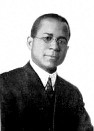 Elder
Watson Diggs Elder
Watson Diggs
Elder W. Diggs, a longtime educator, was born in Indiana's neighboring state of Christian County, Ky. A graduate of both Indiana University and Indiana State Normal (now Indiana State Teachers College) he was a leader of the African-American fraternity Kappa Alpha Psi. He served as the fraternity's Grand Pole march for six years and he was the first to receive the Laurel Wreath honors, the highest honor of the fraternity.
Diggs was an Indianapolis Public Schools educator of many years. After his death in 1947, School No. 42 where he taught was named in his honor.
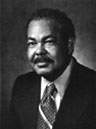 Louis
B. Russell Louis
B. Russell
Russell's name graces IPS School 48 at 3445 Central Ave. Russell, a Black industrial arts teacher, was the world's longest living heart transplant patient.
George Washington Carver
The inventor of peanut industrial sources, George Washington Carver's namesis on the front of IPS School 87. It wasn't until he was 30 years old that Carver was accepted into a higher educational institution. When he attended Simpson College in Iowa and transferred to Iowa State College. After completing his studies he joined the staff of Iowa State where he began much research on the peanut. He invented peanut butter, sweet potatoes and soybeans.
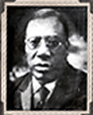 Charles
A. Tindley Charles
A. Tindley
The Charles A. Tindley Charter School was one of the first Black names to be displayed on one of Indianapolis growing list of charter schools. Tindley is a nationally known gospel writer, creating such legendary pieces as "We Shall Overcome" and "Stand by Me."
Tindley excelled despite many youthful hardships. He never received schooling but taught himself to read and write. He later became a minister pastoring over 200 members at a Philadelphia church. During his lifetime he wrote over 45 hymns.
Even though Tindley is not a household name, his contributions to music remain everlasting.
 Dr.
Andrew J. Brown Dr.
Andrew J. Brown
Andrew J. Brown has had an inner-city street named after him for years and now an Indianapolis Charter School honors his works during the civil rights movement.
Brown was the pastor of St. John's Missionary Baptist Church from 1947 to 1990. An enormous supporter of getting Blacks to the polls, Brown marched with Dr. Martin Luther King Jr. in Selma, Ala., in 1965. He was also a founding member of Indiana Black Expo.
Julian D. Coleman
A leader of education and known for his dedication to Indianapolis' youth, Julian D. Coleman was one of the youngest men to hold the position of principal for the Indianapolis school system during his time. Coleman came to Indianapolis in 1919 and later became head of the history department at Crispus Attucks School when it was built in 1930.
Upon his sudden death, due to a heart attack, Coleman was senior vice principal of Crispus Attucks High School.
Frederick Douglass
An abolitionist, orator and writer during the 1800s, Frederick Douglass is best known for his writings in his self-published newspaper the North Star. He wrote three autobiographies, was a big supporter of women's rights and a big fighter for equal rights and opportunity.
Because of his undying efforts, Douglass became a trusted advisor to president Abraham Lincoln.
Douglass escaped slavery by pretending to be a sailor.
|
|