|
|
|
Introduction Problem Orientation This report presents results of Neutron Activation analysis for clays and sherds collected intermittently in north central New Mexico during the summers of 1996, 1997, and 1998. Most material represents micaeous clays and Jicarilla Apache micaceous sherds, although several non-micaceous samples from the Pueblo Coalition site of LA1320 have also been run. Collections during these years were exploratory, prospecting certain sites and clay locales to determine if neutron activation analysis could be used to answer anthropological questions specific to archaeological pottery assemblages in the area. Archaeometric studies of Rio Grande ceramic assemblages are rare (Habicht-Mauch 1989; Spilde et al. 1998, Woosley and Olinger 1990) while morphological and stylistic analyses are abundant. Traditional ceramic analytical techniques have been used to make inferences regarding Pueblo mobility, exchange, social interactions cross-culturally, and social organization (See Mills and Crown 1995 and references therein). Understanding the structure and geochemical nature of ceramic sherds representing different ceramic types would add additional dimensions of data regarding pottery technology, clay source utilization, and landscape usage. Most interestingly, archaeometric analysis can show the movement of clays through social and economic spheres, clays that are made into different forms, for different uses, and decorated in various ways. Archaeometric analysis redirects emphasis back to the clay and its manipulation as this relates to cultural phenomena, an aspect of pottery production important to Native American practitioners today. Archaeometric data are complementary to morphological and stylistic data, but serve to anchor ceramic assemblages back to particular landscapes, archaeological sites, and anthropological contexts of production and exchange. They also demonstrate aspects of pottery production not visible with the naked eye, and can reveal technological practices coded directly into ceramic sherds. An important aspect of technological production not addressed well thus far in Rio Grande ceramic studies is the relationship between people and geographic locations important for the production of ceramics, data that are visible using geochemical methods such as neutron activation analysis, XRF, and electron microbeam analysis It is expected that archaeometric analysis could provide new insights on current and recurrent questions regarding decorated and utilitarian ceramic assemblages in the Rio Grande. Most utilitarian wares are difficult to analyze with traditional methods since they take on a limited number of forms and are rarely decorated, yet they represent important household and exchange items with wide distributions in various archaeological contexts. Here I present initial results regarding the analysis of micaceous utilitarian wares produced by the Jicarilla Apache during the latter 1900s in northern New Mexico. Apache archaeology is not well-studied in northern New Mexico because sites and ceramic assemblages are difficult to identify. This is unfortunate since we know from ethnographic and ethnohistoric references that the Jicarilla served important roles as itinerate traders, linking Plains Indian, Pueblo, and Hispanic economic and cultural spheres. Archaeometric analysis of Jicarilla pottery could help to identify Jicarilla sites and cultural practices in the archaeological record so that the relevance of this history can become visible and available to modern Jicarilla, academic researchers, and cultural properties managers in northern New Mexico.
Summary of Results Initial neutron activation results are positive. Several clay and sherd groupings have been identified, and the technique shows promise for matching sherds found on archaeological sites with specific clay regions. More work is needed to refine clay and sherd groups, however. Continued research will resolve many of these problems that are the result of incomplete clay collections in some mica clay regions and pottery production techniques that obscure geochemical signals. Clays To date, we have processed 52 micaceous clays samples representing 13 clay collection areas, 5 white clay samples from a Pueblo Coalitions site (LA1230), and 1 brown clay sample from the Rio del Oso (LA90815) (Appendix 1). See Map for locations. As can be seen, more clays have been collected from U.S. Hill and Petaca than most other sources. Despite the number of samples taken from these two areas, they are still not well sampled, as will be discussed in a later section of this report.
Archaeological Sites
Sherds from several site contexts were included in analysis. Apache materials are derived from the Rio del Oso north of Espanola in the Santa Fe National Forest, the Site of 100 Tipis located at La Madera, New Mexico, and Santa Rosa de Lima de Abiquiu, a Spanish mission dating to the 18th century near Abiquiu, New Mexico. According to documentary records, the Rio del Oso was occupied by the Jicarilla Apache while they collected rations at the Abiquiu agency during the latter 1800s. Approximately 59 sites have been identified as potential Jicarilla sites in this valley. These include one large tipi complex site with up to 40 tipi rings, micaceous pottery, pottery production debris, household debris, historic artifacts, and lithic refuse. Other sites include smaller numbers of tipi rings with associated pottery production and household materials. Isolated "pot drops" of Apache pots occur intermittently in the valley. The ceramic assemblage analyzed here includes 28 samples from the Rio del Oso. The Site of 100 Tipis is a large tipi complex site brought to our attention by Mr. Felipe Ortega, a Jicarilla/Hispanic pottery and consultant to this project. The Site of 100 Tipis includes multiple tipi rings, a possible relay race track used for ceremonial purposes, garden mulch plots, and evidence of intermittent Hispanic occupation. Mr. Ortega states that the site was used by his ancestors periodically for large gatherings during the latter 1800s and early 1900s. Santa Rosa de Lima de Abiquiu was occupied by Spanish missionaries during the 1700s. The site is a historic monument containing the remains of an adobe church structure. Various types of micaceous and non- micaceous Apache, Pueblo and Hispanic sherds are found on this site. LA1230 is a Coalition period Pueblo site located near the Pueblo of Poshu'enge on the Rio Chama. LA1230 is distinctive given its location on a ridge containing abundant exposed white clay sediments and evidence of relatively large-scaled Santa Fe Black on White, Biscuit A, Bisuit B, and Utilitarian ware ceramic production. LA1230 contains multiple residence structures, evidence of agricultural activity, agricultural ceremonialism, and numerous and large kilns.
Sample Preparation Clays The techniques used in processing clays follow those outlined in Glasscock (1992) in Chemical Characterization of Ceramic Pastes in Archaeology. Raw clays were softened and formed into clay briquettes (approximately 4X3X2cm). Briquettes were then baked in a kiln at 800 degrees Celcius for one hour to remove carbonates. After rinsing with dionozed water, the external rind of the briquettes were ground away and the clean samples were clipped, rinsed and placed in a drying oven for two hours. After drying, samples were pulverized to a fine powder, placed in a glass vial and allowed to dry in the drying oven for 48 hours. Two techniques were used to prepare raw clay into briquettes. Clays collected during 1996 and 1997 were softened and formed into briquettes with no prior preparation. Clays collected during the 1998 field season (C105 to C130) were first screened using 2mm mesh plastic window screen. This removed significant amounts of aplastic gravels and coarse sands from the clay body. This procedure mimics ethnographic descriptions of micaceous clay processing practiced by the Jicarilla Apache. Pure clays relatively free of gravels and organics were chosen carefully at extraction pits. Clay was then brought back to household sites to be cleaned further by the following methods (See Opler 1971; Ortega 1998). Large stones were first removed by hand. Clay was next suspended in a watery slurry inside a micaceous clay pot. The mixture was then swirled to bring organics to the surface. These were removed by hand and the clay was poured into a hole in the ground lined with dear skins. Stones and other course sands remained at the bottom of the bowl and were discarded near the clay pit. Water remaining in the skin-lined pit evaporated and seeped into the ground, leaving a prepared, self-tempering micaceous clay within a few days. By processing clays in accordance with ethnographic descriptions, signal matches between collected clays and archaeological sherds may be more accurate. During future activities, the remaining 1996 and 1997 clays will be processed similarly and run. Atomic weights will then be compared between samples processed according to Jicarilla techniques and those with no prior preparation to see the degree to which clay preparation affects the geochemical signature of clays.
Sherds Sherds were processed by first grinding away the outer rind or slip to expose a clean surface. Clean samples were clipped, rinsed and placed in a drying oven for two hours. After drying, samples were pulverized to a fine powder, placed in a glass vial and allowed to dry in the drying oven for 48 hours. A total of 64 sherds have been processed so far. Sample sizes are as follows (See Appendix 2) Rio Oso: 28 Site of 100 Tipis: 14 Santa Rosa de Lima de Abiquiu: 7 The Glasscock Site: 1 Poshu: 1 LA1230: 13
Irradiation and ?-Ray Counts (Quoted from L. Minc Reporting Procedures, Ford Nuclear Reactor, Ann Arbor, MI) Irradiation procedures follow the Ford Nuclear Reactor standard multi-element analysis of geological and archaeological samples utilizing two separate irradiations. The first involves a short irradiation of samples encapsulated in polyethylene micro-centrifuge v-vials. For this P-tube irradiation, the sample is delivered via pneumatic tube to a core-face location with an average flux rate of 2 X 10¹² n/cm2/s. Two separate analyses of gamma activity (one after a 13 minute decay and a second after a 1 hour and 56 minute decay) permit accurate determination of the short half-life elements, including aluminum arsenic, barium dysporsium, europium, gallium, manganese, potassium, sodium titanium and vanadium. P-tube counts are not included in this analysis, but will be included in future reports The second irradiation is much longer, for which samples must be encapsulated in high-purity quartz tubing; samples are irradiated in a core-face location with an average flux rate of 4 X 10¹² n/cm2/s for 20 hours. Again, two separate gamma counts are done (after a 1-week decay period and after a period of 5 weeks decay). In these analyses, we look for the following intermediate and long half-life elements: antimony, arsenic, barium, cerium, cesium, chromium, cobalt, europium, hafnium, iron, lanthanum, lutetium, molybdenum, neodymium, potassium, rubidium, samarium, scandium, selenium, sodium, tantalum, terbium, thorium, uranium, ytterbium, zinc and zirconium. Trace element concentrations are determined through the direct comparison method using three replicates of the standard reference material NBS-SRM-1633a (coal fly ash) as the standard, and NBS-SRM-278 (obsidian rock and NBS-SRM-688 (basalt rock) as the check standards.
Analytical Procedures Procedures for analysis follow those outlined in Glascock (1992), briefly reviewed below.
Results Results of analysis show that several clay sources are distinctive and can be separated from other sources in geographically distinct areas. These include micaceous clays from Petaca, U.S. Hill, Le Deux, Mora and Picuris. Abiquiu micaceous clays are also distinctive, but can not be separated from other geographically distinct clays without further research. The remaining clays did not produce distinctive groupings. The lack of patterning in the remaining clays could be due to sampling procedures. Many of these clay source locations have not been adequately sampled. In all cases, more clay samples are needed to characterize clay regions. The non-micaceous clays from LA1230 and LA90815 are similar, but are distinctive from micaceous clays in the region. Sherds from site LA1230 are made from clays at that or nearby locales. When compared across several elements, micaceous sherds from Apache sites consistently produced between three and four groupings, indicating the use of a variety of clay sources or production techniques that produced geochemically distinctive sherd groups. A more comprehensive sherd analysis program including morphometric, petrographic, and electron microprobe techniques will be necessary to determine whether clay source or technological practice best accounts for these differences. Several sherds nonetheless can be matched well with either Petaca or U.S. Hill clay samples. The majority of sherds belong to a distinctive cluster that is similar to both Petaca and U.S. Hill clays.
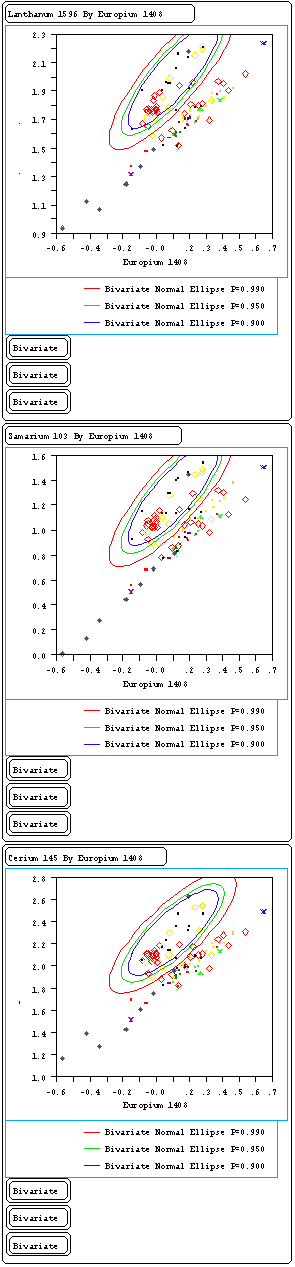
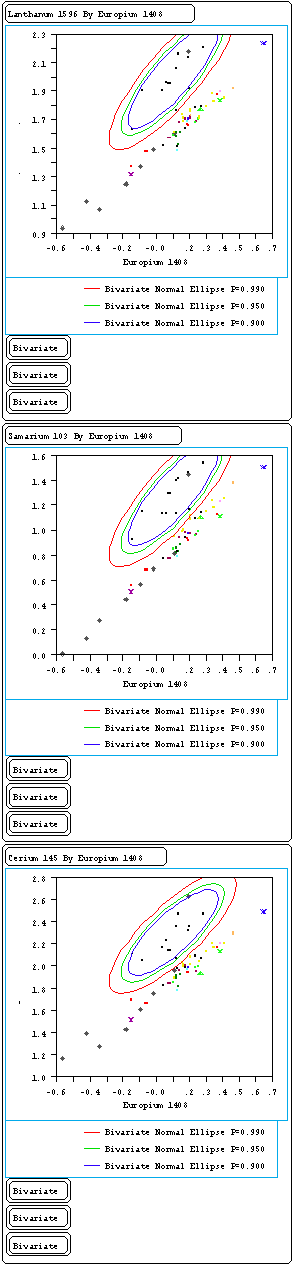
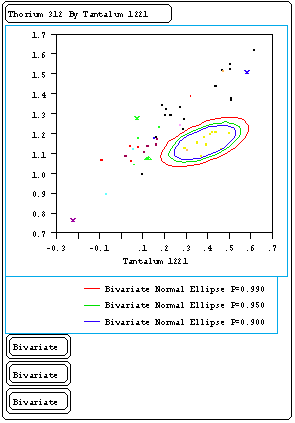
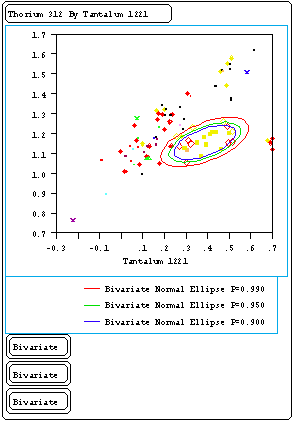
1. Petaca and U.S. Hill Clays. Density Elipses in the plots below define a possible grouping of Petaca Clays as these relate to sherds recovered from archaeological sites. The first series of plots highlight a possible clay grouping The second series of plots show this grouping in relation to sherds Sherds from the site of 100 tipis at La Madera (Yellow Triangles) and the Rio Oso (Red Triangles) are included on these bivariate plots. Sherds that fall within the density elipsis suggest the clay for these came from Petaca near La Madera in New Mexico. Clay groupings represented inside density elipses
Globe Mine: 4 Sherd groupsings represented inside density elipses come from the following sites Rio Oso: All are Apache sites and sherds LA90855: 1 LA90815: 10, 4 LA101110: 12, 13, 15 LA101111: 16, 21, FS-06-984: 17, 23, 6 LA90537: 76, 77, 78, 79 FS-06-1196: S9 LA102207: 20
La Madera: 100 Tipis Apache: 95, 96, 97, 98, 99, 100, 101, 102 Hispanic: 90, 91, 92, 93
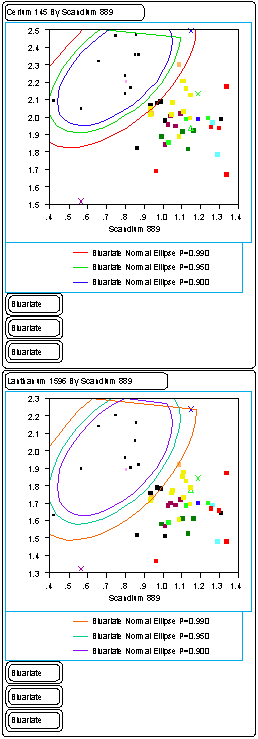
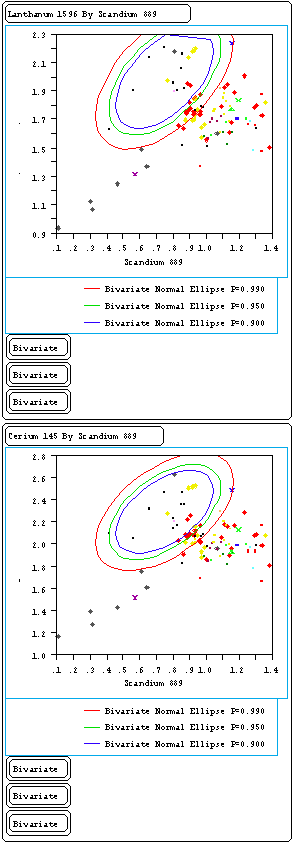
This second set of plots show a similar grouping of Petaca Clays. As above, the first series of plots show the clay groupings while the second displays sherds in relation to these groupings Sherds from the site of 100 Tipis at La Madera (Yellow Triangles) and the Rio Oso near Abiquiu New Mexico (Red Triangles) are included on these bivariate plots. Sherds that fall within the density elipsis suggest the clay for these came from Petaca near La Madera in New Mexico.
Clay Groupings Represented
Globe Hill Mine: 4
Sherd Groupsings Represented Rio Oso: All are Apache sherds LA90855: 1 La101019: 14, 7 LA101110: 13 LA101111: 21, FS-06-984: 17, 23, 6 LA90537: 76, 77, 79 FS-06-1196: 9 LA102207: 20
La Madera: 100 Tipis Apache: 95, 96, 97, 98, 99, 100, 101
Note: The following sherds occur in both series of plots presented above:
The following bivariate plots demonstrate groupings for the U.S. Hill clays (Yellow). Problems exist in distinguishing Petaca and U.S. Hill Clay sources and assigning sherds to these locales. The above plot shows a fairly discreet grouping of these clays. Next, sherds from the Rio del Oso (Red triangles) and 100 Tipi sherds (Yellow triangles) were added to this plot. Those that fall within 95% density elipses should indicate good matches with this source. Several of these sherds are also assignable to the Petaca clays, however. These include: Rio Oso: 17, 20, 21, 23, 6, 78, 9 100 Tipis: 90, 92, 95, 98 One sherd: S22 does not match with Petaca and probably truly represents a paste derived from U.S. Hill clays.
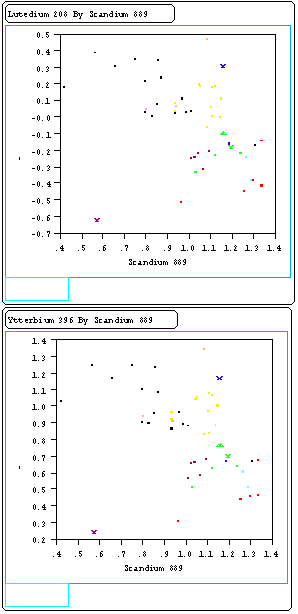
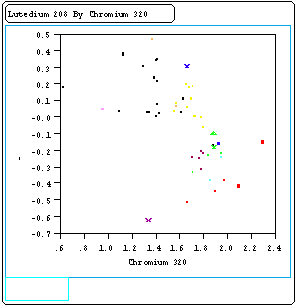
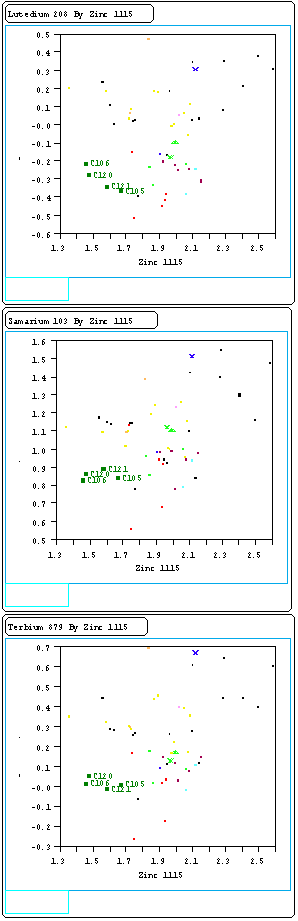
Plots below demonstrate the difficulty in separating Petaca clays (in Black) from U.S. Hill clays (in yellow), although both are distinguishable from many other undefinable clays. Ideally, elements compared in these plots should be intercorrelated, producing separations between clays that linear (as shown with the U.S. Hill clays in the bivariate plot above). U.S. Hill clays may be distinguishable using pneumatic tube counts (short counts) not run thus far. P-tubes may provide an additional 5 elements for analysis. Alternately, the Petaca and U.S. Hill clays may represent the same or a related set of geolocial formations. Variability in both the Petaca and U.S. Hill clays should be pursued further by systematic collection of clay pits from different locales within each district. Most Petaca and U.S. Hill clays included in this study come from a very few localized sources. Distinguishing Petaca from U.S. Hilll is significant given their geographic locations distant from each other, and the tendancy for the Rio del Oso and 100 Tipis sherds to cluster with one or both of these sources.
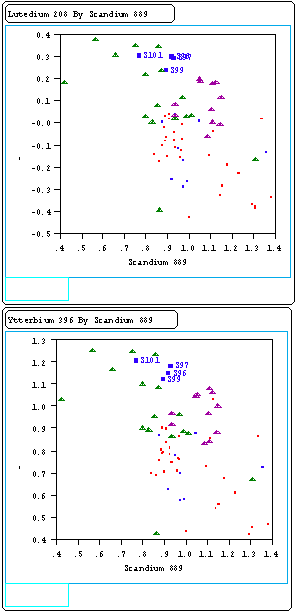
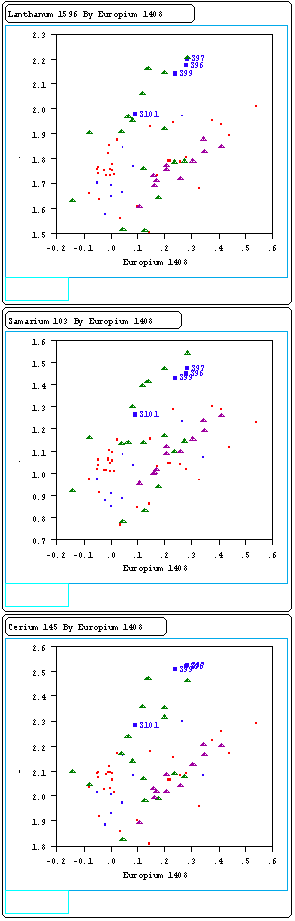
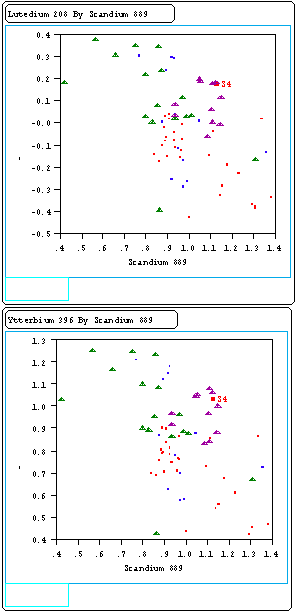
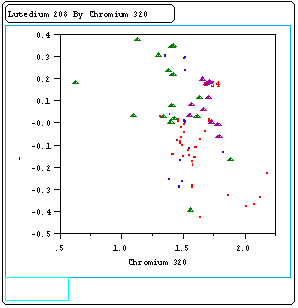
Finally, the bivariate plots below show only Petaca and U.S. Hill clays as these compare to sherds taken from the Rio del Oso and the Site of 100 Tipis. All other clays and sherds have been excluded. The element comparisons used above are repeated here. These element comparisons produce the best separations of Petaca and U.S. Hill clays. These plots are provided to show how many of the Rio del Oso and 100 Tipis sherds cluster between the Petaca and U.S. Hill clay sources and are not able to be assigned to either. Other sherds associate with both sources depending upon the element pair under consideration. A few sherds consistently associate with specific sources. Despite these difficulties, it is interesting that many of the sherds from the Rio del Oso and La Madera come from clays found at U.S. Hill or Petaca, sources that are used widely today by micaceous potters.
Green Triangles: Petaca Clays Purple Triangles: U.S. Hill Clays Blue Squares: 100 Tipi Sherds Red Squares: Rio del Oso Sherds Several 100 Tipi Sherds consistently associate with Petaca Clays. Most sherds from both sites cluster in an area between overlapping Petaca and U.S. Hill clays indicating
Green Triangles: Petaca Clays Purple Triangles: U.S. Hill Clays Blue Squares: 100 Tipi Sherds Red Squares: Rio del Oso Sherds
Solutions:
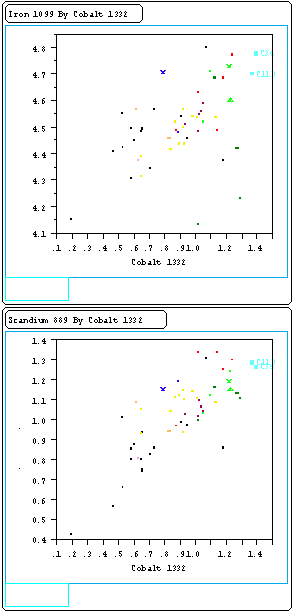
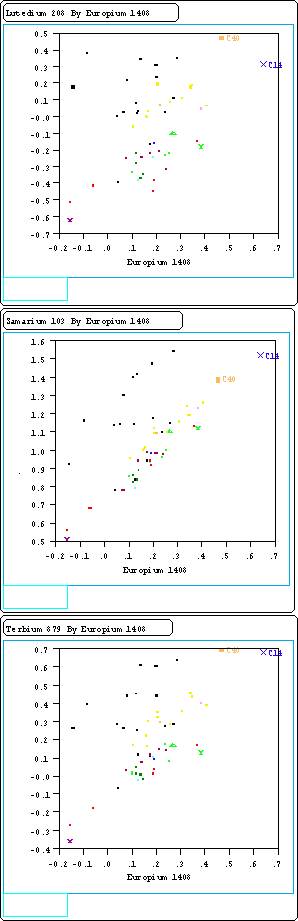
2. Other Clay Groupings. Several other clay source locations are distinctive geochemically. These include clays from Anton Chico, Le Deux, Mora, and Picuris (presented below). No sherds match these sources, and all of these sources should be collected further to define within source variation.
Anton Chico Clays
Le Deux Clays
Mora: Blue X Picuris: Orange Square
3. Mica Sherd Groupings
Rio del Oso: Red Squares 100 Tipis: Blue Diamonds Santa Rosa de Lima de Abiquiu: Green Diamonds
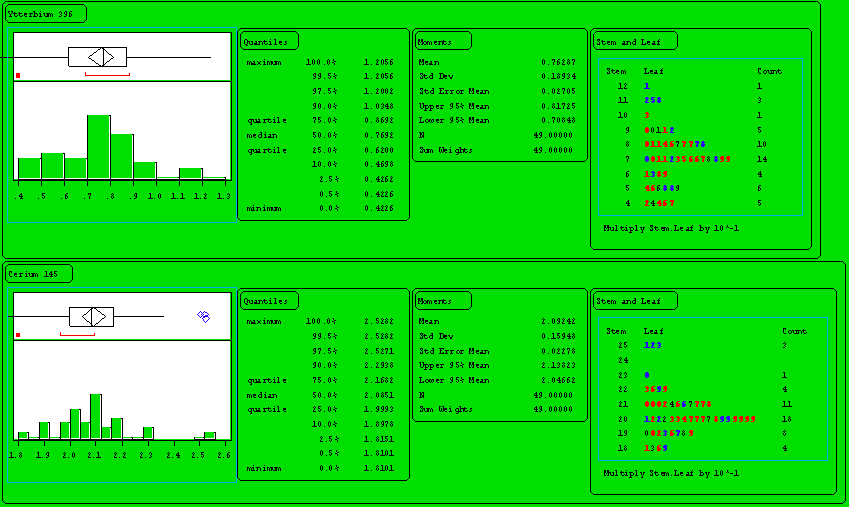
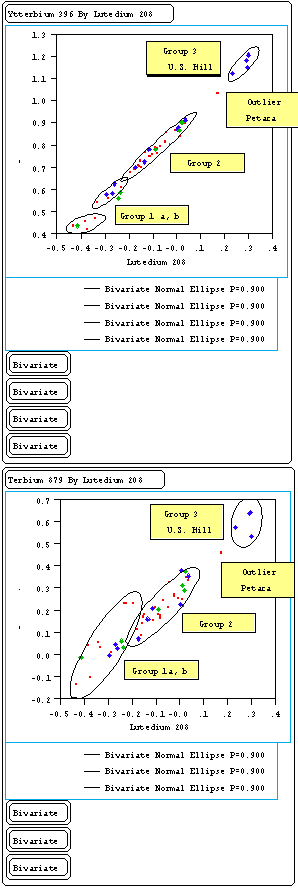
Clusters indicate that between three and four separate clay sources or pottery production techniques produced differences in the geochemistry of these sherds. These clusters are supported by histograms of cerium and ytterbium displaying between three and four modes.
Group Two sherds represent those sherds discussed above that fall between Petaca and U.S. Hill clays. Group Three Sherds probably derive from U.S. Hill. The isolated outlier sherd is made from clays at found at Petaca.. The clays from Group 1a, b sherds have not been identified and do not show a high degree of consistency in their placement on several different bivariate plots, leading to problems in defining this cluster. Further collections at these sites will help to determine the number of discrete sherd groupings. Analysis of clay paste structure and morphological characteristics of sherds may explain technological differences resulting in these clusters. Electron Microbeam analysis that can target specific mica flecks in sherds could be used to link sherds back to mica regions, or show the mixing of clays or mica in the production of pottery at these sites.
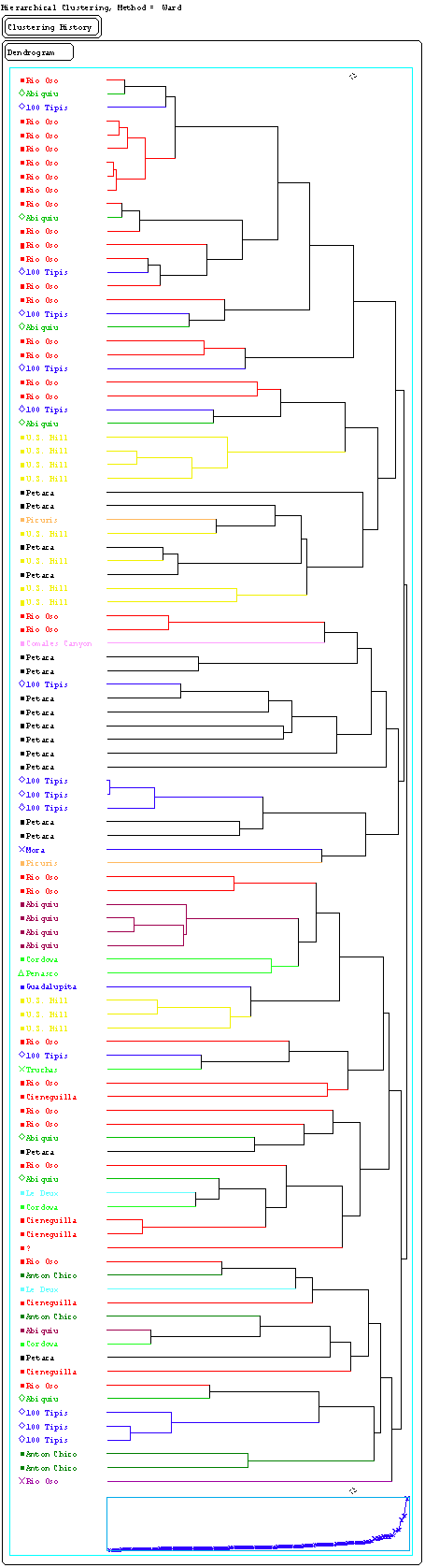
4. Cluster Analysis of Mica Clays and Sherds
Excellent Matches (Verifiable with Bivariate Plots) 100 Tipi sherds (S97, S96, S99, S101) match well with Petaca Clays. Rio del Oso sherd (S4) matches well with U.S. Hill clays
Good Matches Rio del Oso sherds (S7, S14) match fairly well with Petaca Clays Rio del Oso sherd (S10) matches fairly well with U.S. Hill Clays 100 Tipi sherds (S102) match fairly well with U.S. Hill Clays
Other Possible Matches Abiquiu Clays Rio del Oso Sherds (S24, S11) Truchas Clay (C37) Rio del Oso Sherds (S19) 100 Tipis (S94) Cieneguilla (C116) Rio del Oso (S22) Anton Chico (C121) Rio del Oso (S2) Petaca (C6) Santa Rosa de Lima (S87)
5. LA1230: Pueblo Coalition Site Results
In terms of overall patterning, the 1230 clays show three distinct groups with sherds that cluster with them as follows. 1. Top solitary sample: C55 - Feature 6 Sherds: None
Sherds S27 Kiln 4 Unk Type S28 Kiln 2 Unk Type S66 Feature 6 Utility Ware S65 Feature 6 Utility Ware S68 Feature 6 Utility Ware S69 Feature 6 Biscuit A S71 Feature 1 Biscuit B S73 Feature 3 Biscuit A S74 Unk Location Santa Fe BW S75 Unk Location Utility Ware Clays C9 Feature 1 (West Side)
Discussion Although the results presented here are initial, it can be demonstrated that neutron activation methods are useful in the analysis of micaceous and non micaceous ceramic assemblages in the northern Rio Grande. Based on a sample of 52 micaceous clays samples representing 13 clay collection areas, 5 white clay samples from a Pueblo Coalitions site (LA1230), and 1 brown clay sample from the Rio del Oso (LA90815), neutron activation analysis has demonstrated the following.
Neutron activation analysis has opened the door for asking anthropologically oriented questions regarding hisotric Jicarilla Apache movements and economy during the latter 1800s. Most notable are the sites from the Rio del Oso. The Jicarilla were reported to be producing pottery for sale to local Hispanic settlers while collecting rations at Abiquiu agency nearby. Agents report that these Jicarilla wished to stay in the Rio del Oso and be allowed to assimilate into local communities. Agents were also very concerned that the Apache should not leave the general area of the agency. Yet sherds found on the Rio del Oso sites indicate that the Jicarilla were traveling great distances to obtain high quality clays from Petaca and U.S. Hill. Ethnographic and oral history information indicates that women and two-spirits (berdaches) were the primary collectors of clay. Cultural practices restricted men from selecting and extracting clay. When they did go along to help with the labor, women were present to perform the appropriate rituals. Sherds found in the Rio del Oso may therefore reflect gendered practices of clay procurement and sherd production at a time when women's products served as a focal point for family economy during the 19th century ration period. Sherds also show that some Jicarilla individuals broke with agency policy to collect clays in distant locations in order to make pots for local consumption and for sale to Hispanics. This indicates a willingness on the part of some Jicarilla to maintain traditional trading relationships and roles in the changing frontier setting of 19th century New Mexico. The samples from the Site of 100 Tipis is small, but most sherds show the same patterning as the Rio del Oso sites, implying the use of similar sources or techniques into the 20th century. Further collections of Hispanic and Pueblo pottery found at this site could reflect the multi-ethnic nature of Jicarilla ceremonial gatherings. The samples from LA1230 are likewise small, but indicate that this Pueblo may have been located to take advantage of locally abundant clay resources in the production of pottery. Further analysis could potentially demonstrate LA1230 to be a ceramic production site for ceramics distributed elsewhere through social and economic networks in the Rio Grande.
Future Research Initial results of analysis have led to additional questions of the archaeological record and pointed to potential problems in the existing data base. Future research falls into three categories: (1) Clay collection strategies, (2) Archaeological sherd sampling strategies, and (3) Analytical strategies. Clay Collection Strategies. The synthesis of data thus far points to potential problems of sampling in the existing data base. Some clay samples were collected "second-hand" from local consultants and their true locations can not be verified. Other collection regions are represented by only one or two samples. Clay regions that appear to be well-collected (e.g. Petaca and U.S. Hill) actually represent very localized collections. Sample numbers will be increased this summer. Dr. George Austin of the New Mexico Bureau of mines has provided the locations of thirteen micaceous deposits in the U.S. Hill, Petaca, Picuris, Dixon, Mora, and Taos areas. These deposits are located in areas not well-collected thus far. Local potters have likewie identified several sources not included in Dr. Austin's survey. These are located near Taos, in Mora, and near La Madera New Mexico. Carson National Forest records will be used to locate sources near El Rito and La Madera that have been identified by Mr. Felipe Ortega. I will likewise attempt to relocate four sources in the vicinity of Anton Chico, San Miguel County that were identified by Leo Rein (1949). Archaeological Sherd Sampling Strategies Jicarilla Apache sherds from the Rio del Oso will be collected this summer. Slight variations in Jicarilla ceramics from this village indicate the presence of types not yet recognized in the current literature. Collected sherds will be subjected to traditional ceramic analysis, petrographic analysis, and other archeometric techniques such as neutron activation and electron microprobe analysis. Museum collections will likewise be sampled to retrieve Apache ceramics dating to the 1700s. Ceramics dating from this time represent a different Apache ceramic type whose clay properties are not well understood. Comparisons between the different types of sherds will be conducted using archeometric techniques. Analytical Strategies As mentioned previously, raw clays collected during the 1996 and 1997 seasons will be prepared into briquettes by using Jicarilla clay cleaning practices. These samples will be run and their atomic tweights compared to results obtained from the same clays unprepared. This summer, I will also obtain clay from Petaca prepared and made into briquettes by Mr. Felipe Ortega. These samples will be used as a control to determine the accuracy of our results using raw clay and sherds retrieved from sites in northern New Mexico. Neutron activation results will continue to be reviewed for patterning in the data. This will involve refining groups through statistical methods and testing each sherd against these groups to determine the probability of that sherd's membership in a particualr group. This portion of analysis represents continued maniupation of the data not attempted in this report. Results in this report represent exploratory statistical approaches only. Petrographic analysis will be conducted on selected sherds to understand the structure of paste bodies and the contribution of aplastic inclusions that could be contributing to bulk geochemical signals. Petrographic analysis will Some problems in defining sherd groups and matching these to clay source locations may be resolved through the application of Electron Microprobe Analysis (EMA). EMA will allow for the characterization of minute pieces of mica in clay and sherd bodies. Recent studies using EMA to analyze mica in northern New Mexico shows that mica regions are distinctive and internally homogenous. EMA could be applied to archaeological questions regarding micaceous pottery production in three ways, (1) it can be useed to dentify possible clay mixing as represented by a diversity of geographically distinct mica fragments in a sherd body, (2) It can be used to overcome difficulties in bulk neutron sampling, and (3) mica found in sherds can be sourced to mica district in northern New Mexico. Work will continue with micaceous clays as this class of artifacts promises to inform archaeological studies of Jicarilla Apache ethnohistory, trade and economy.
Appendix 2: Clay Sources
Appendix 2 Sherd Database
|