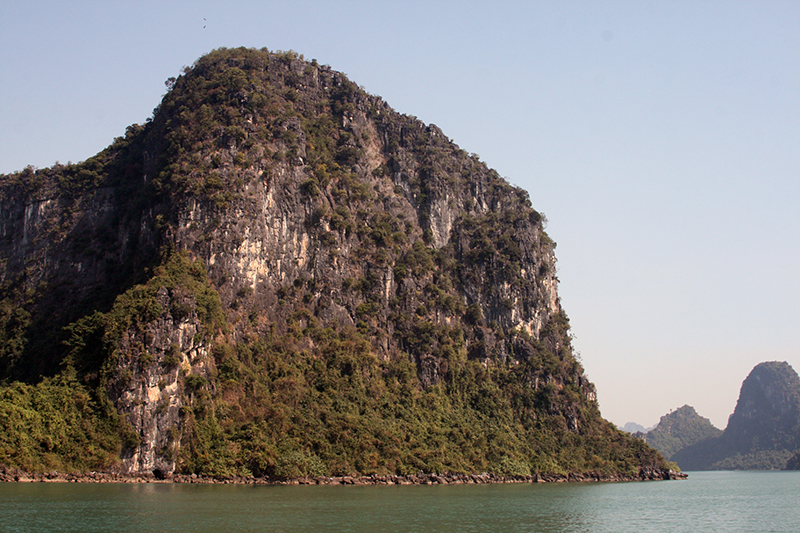
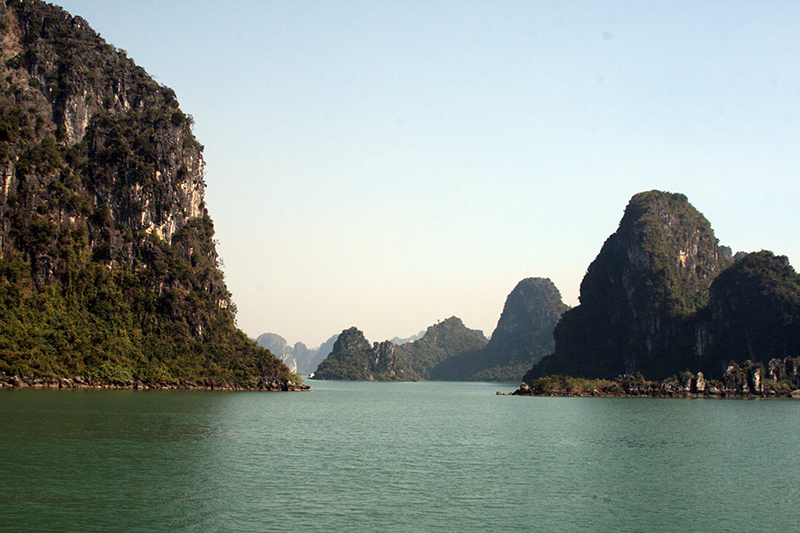
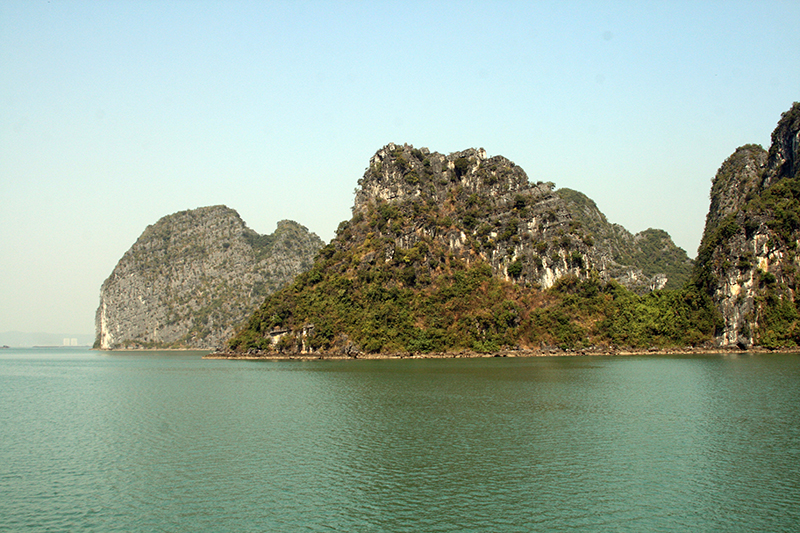
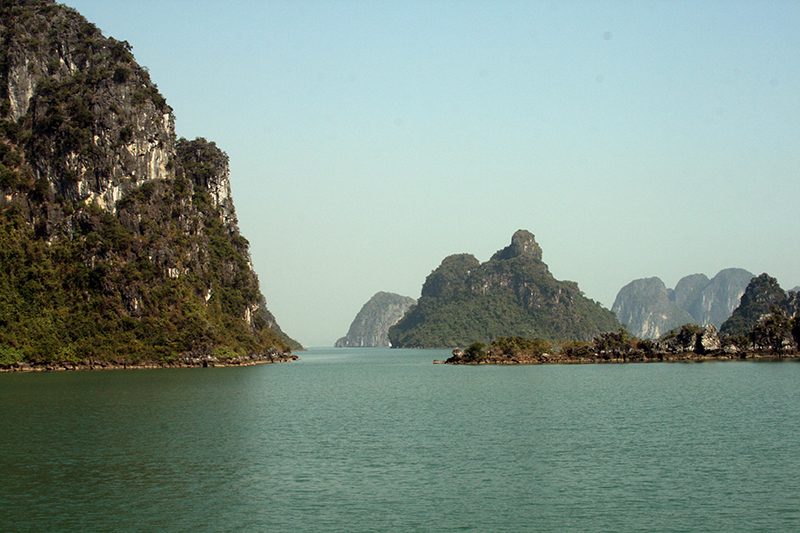
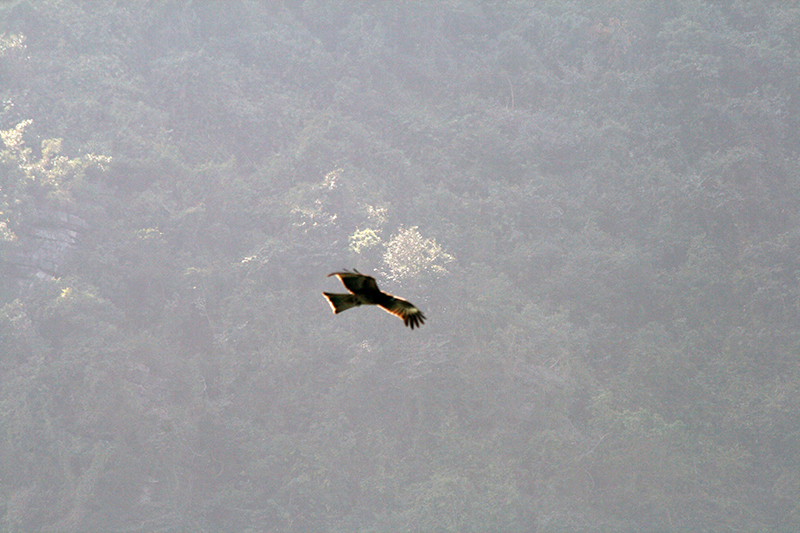
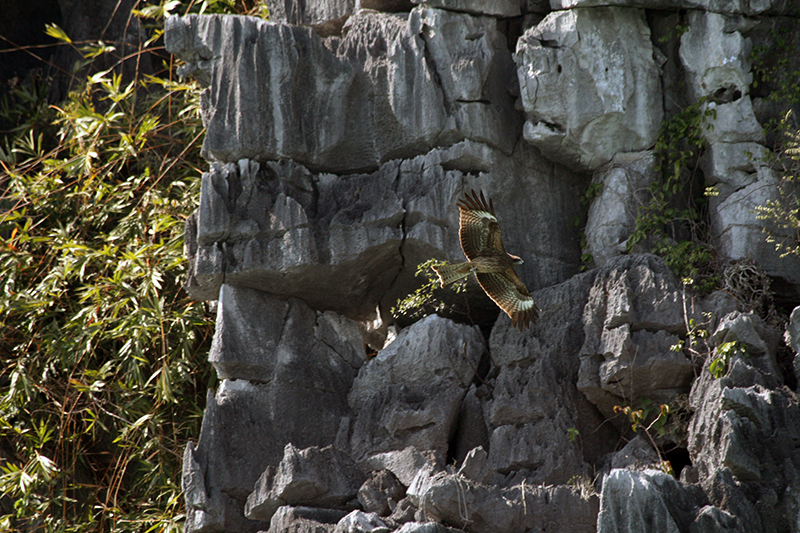
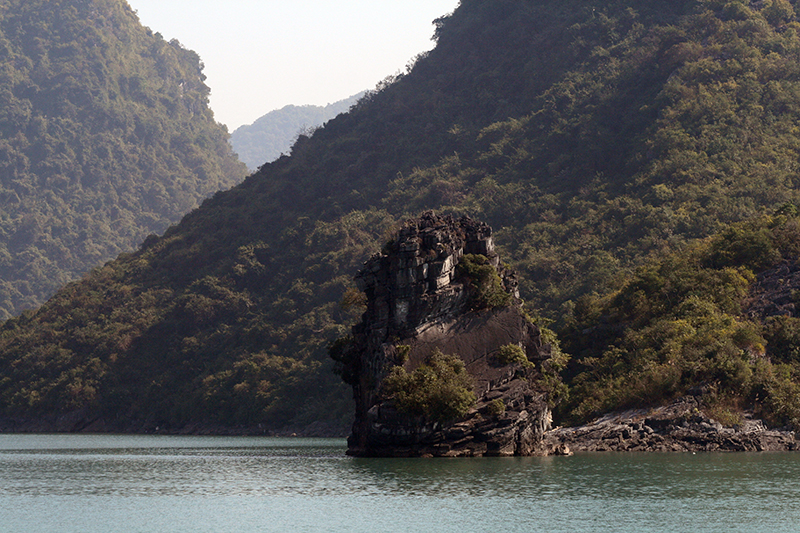
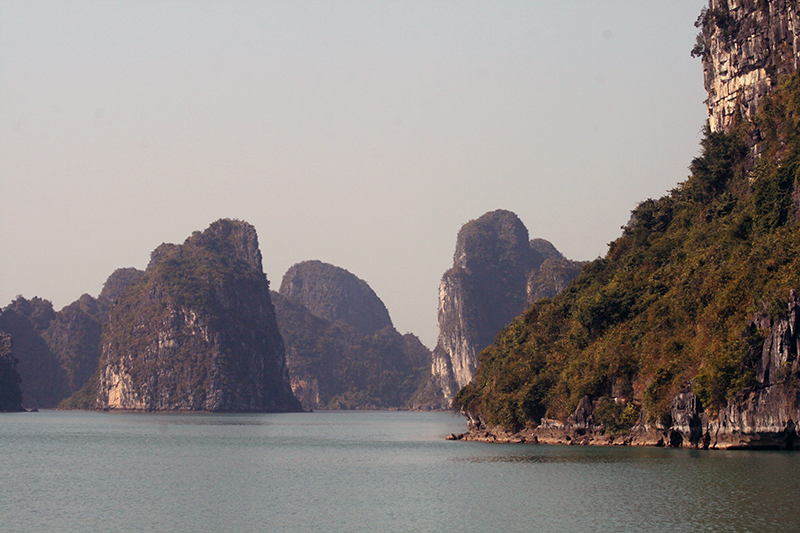
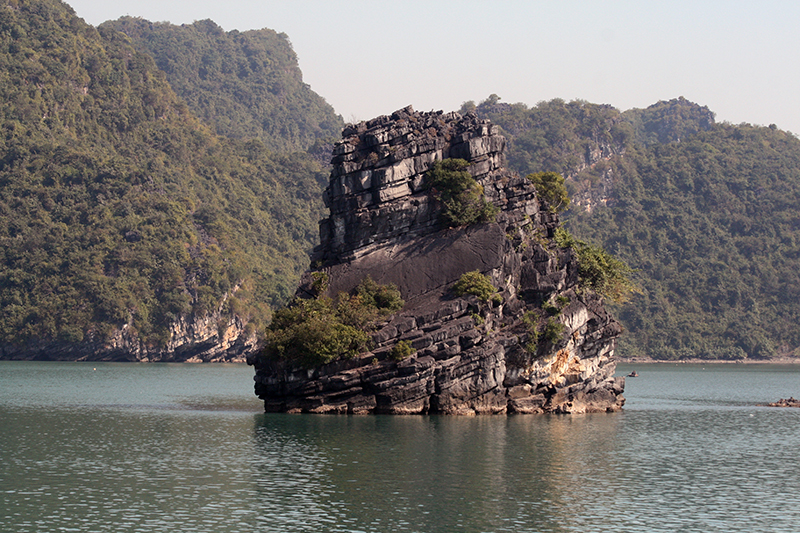
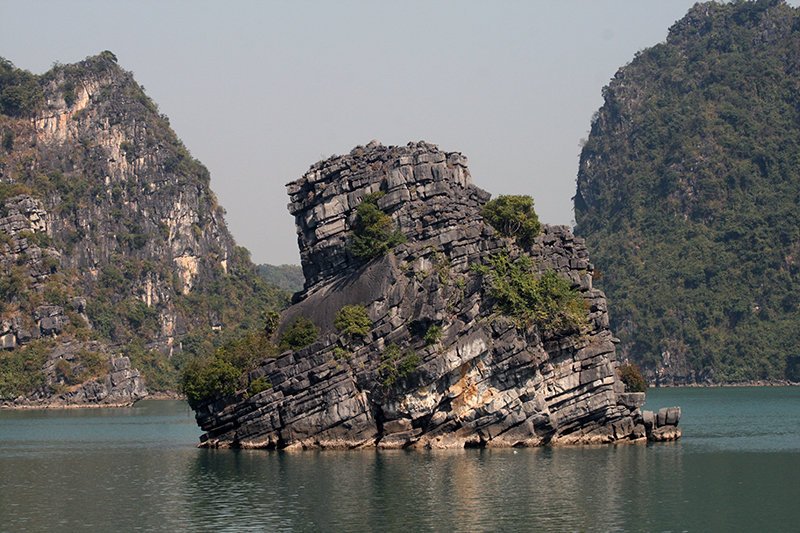
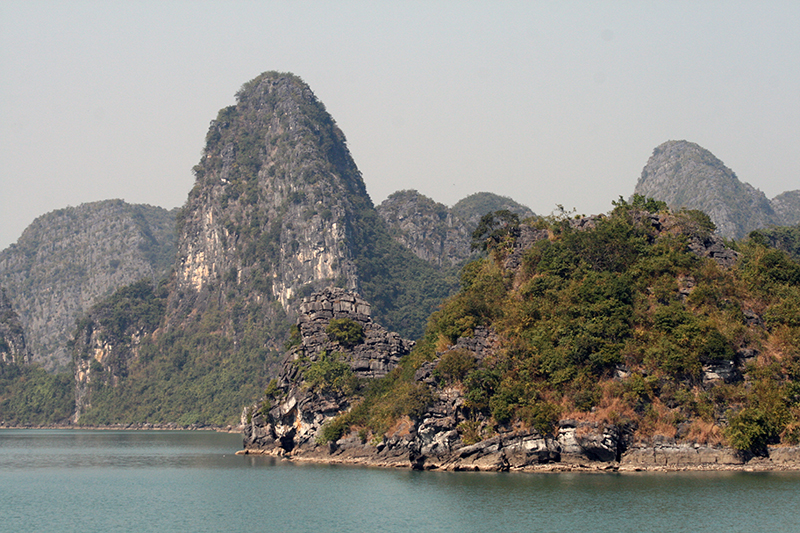
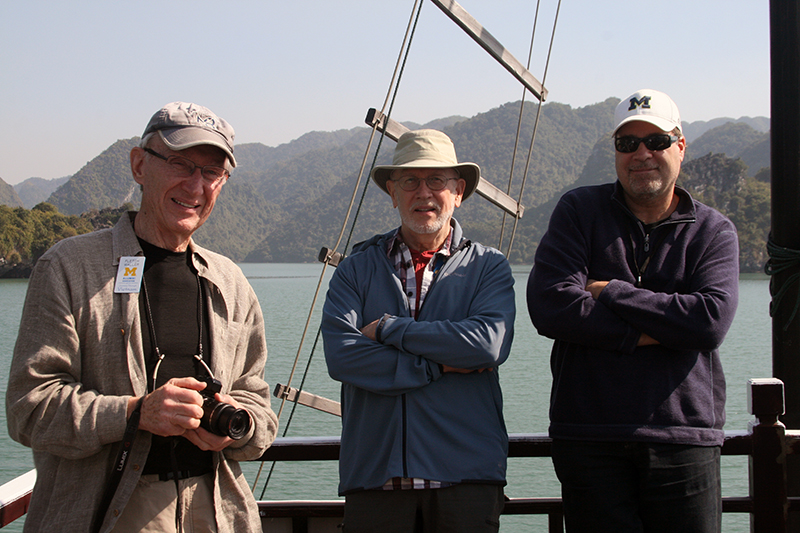
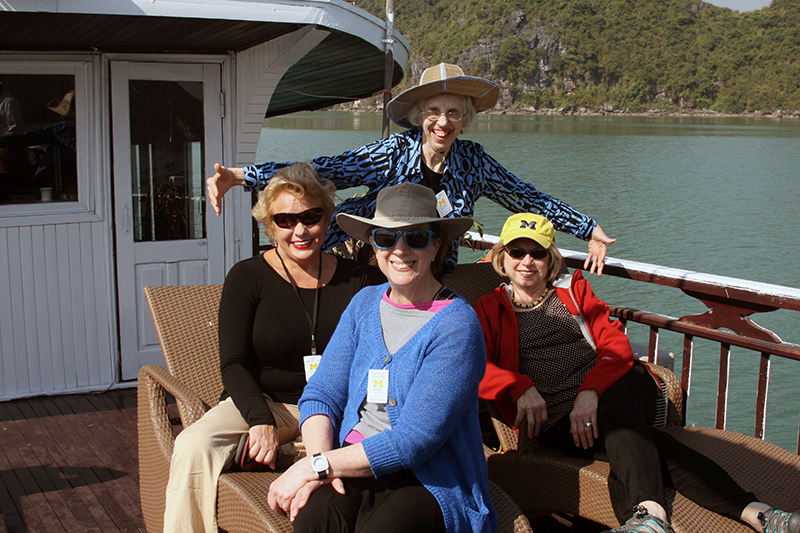
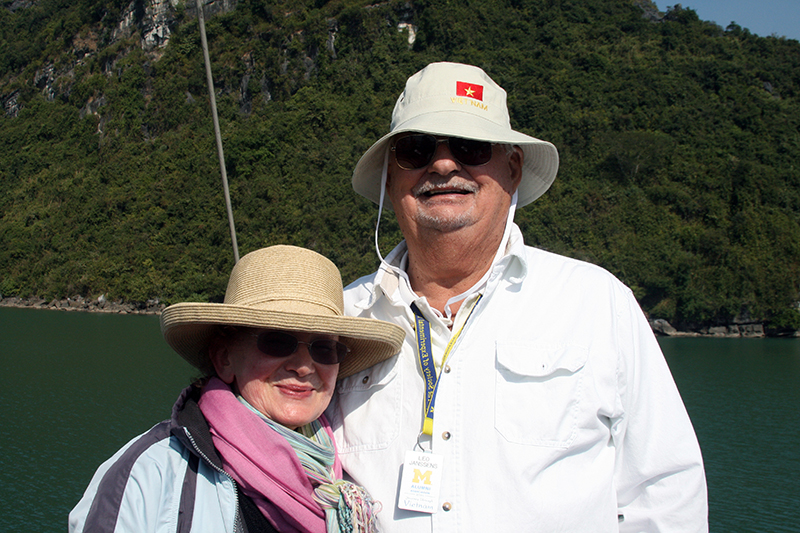
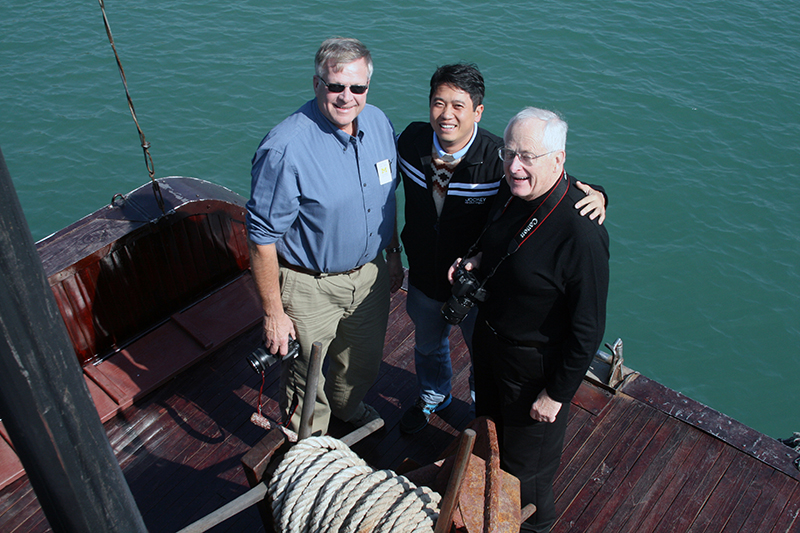
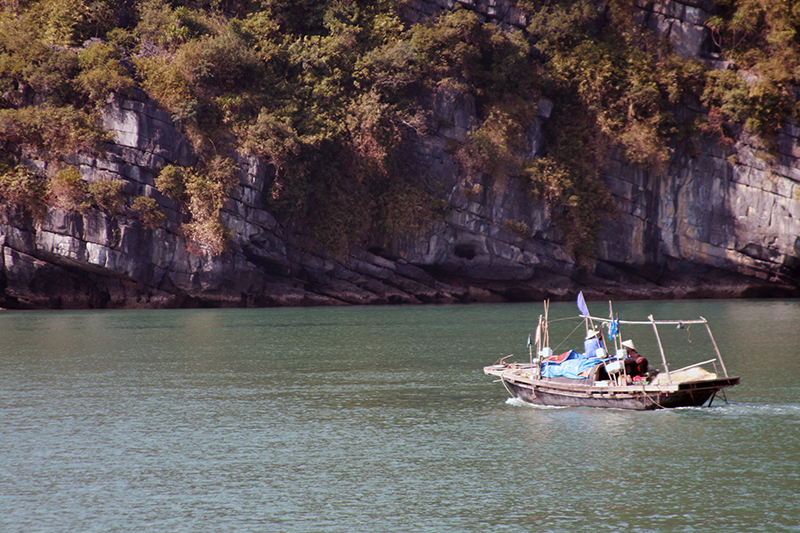
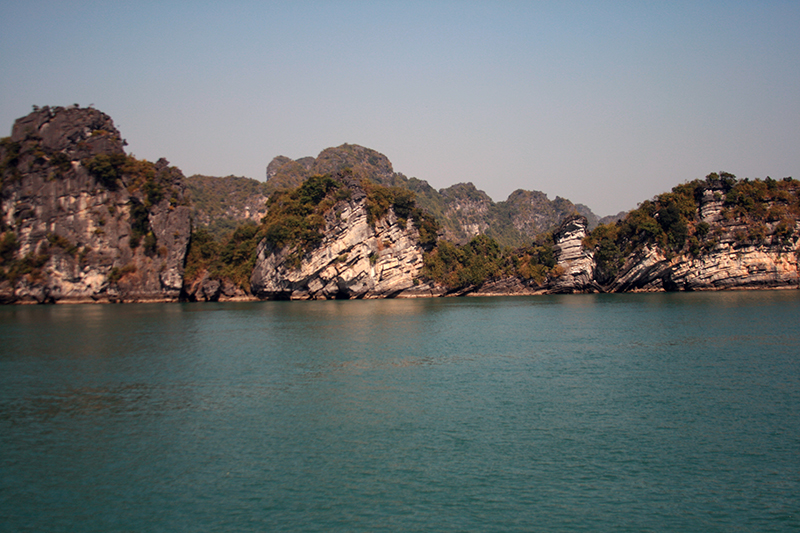
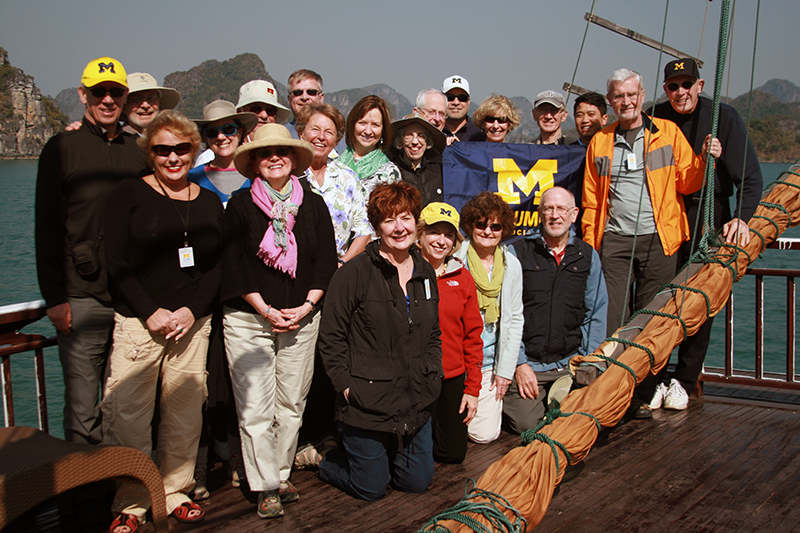
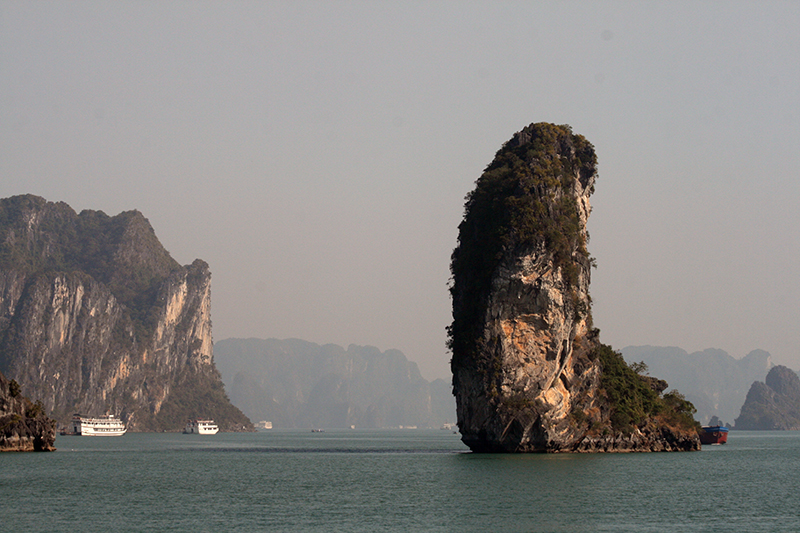
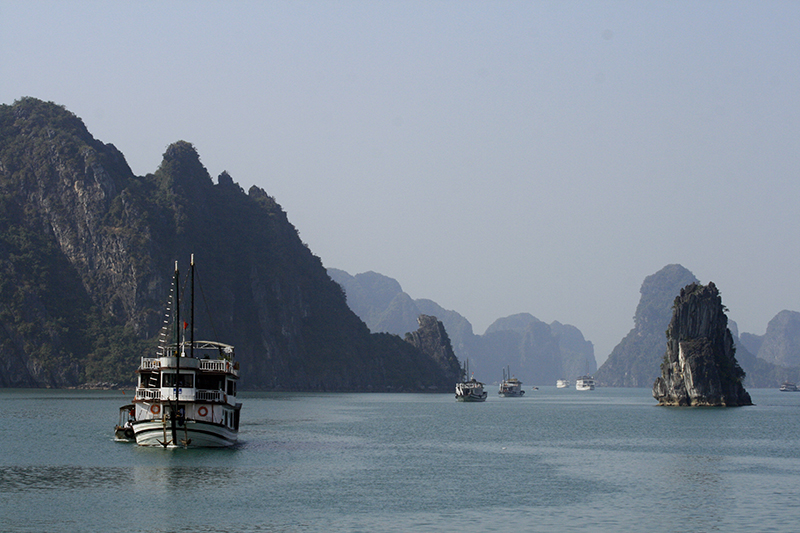
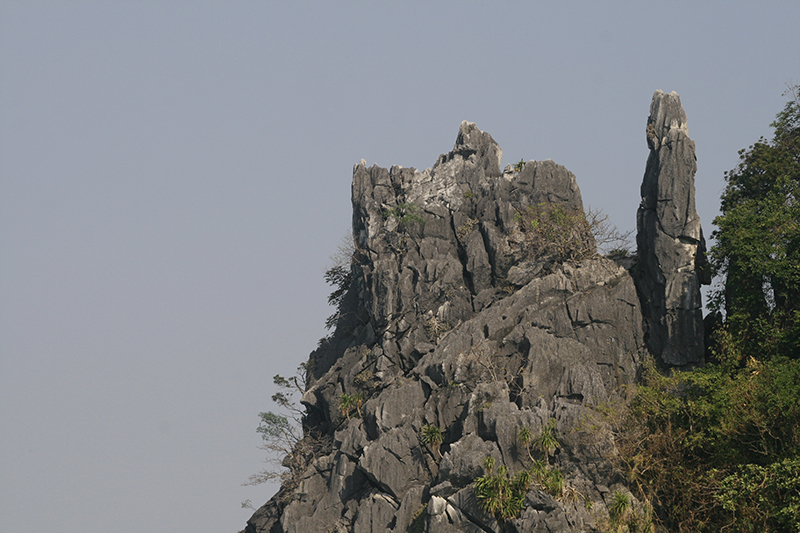
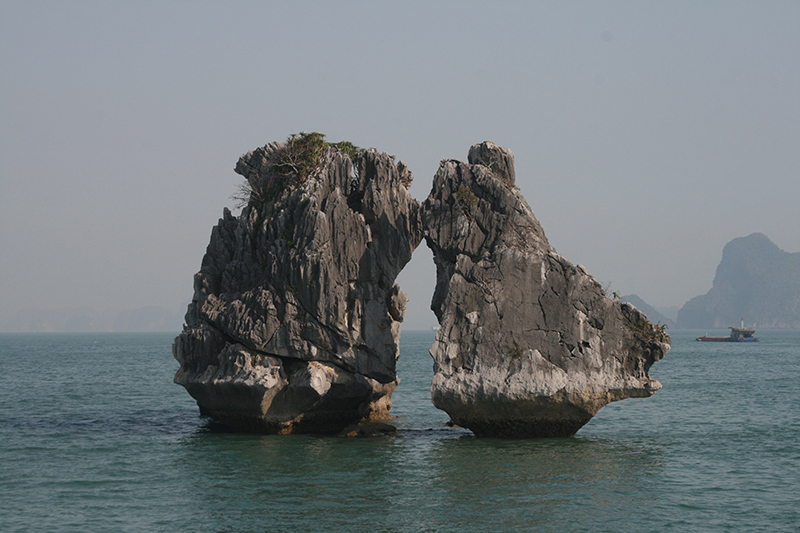
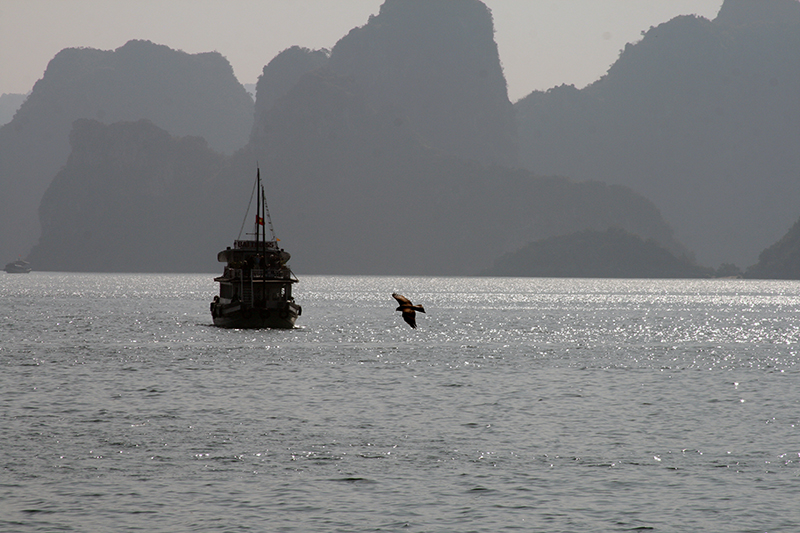
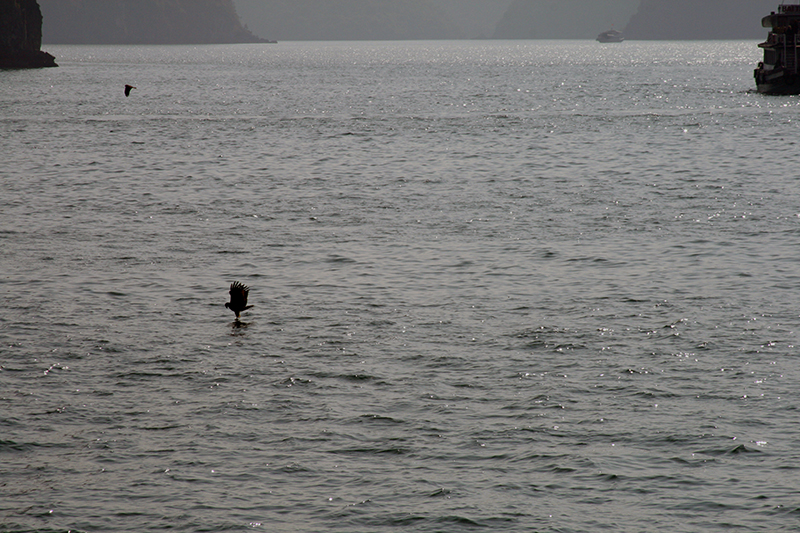
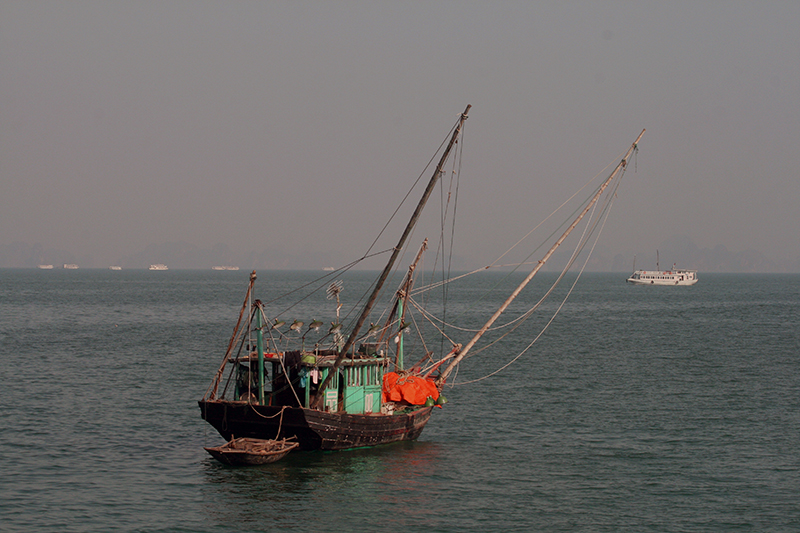
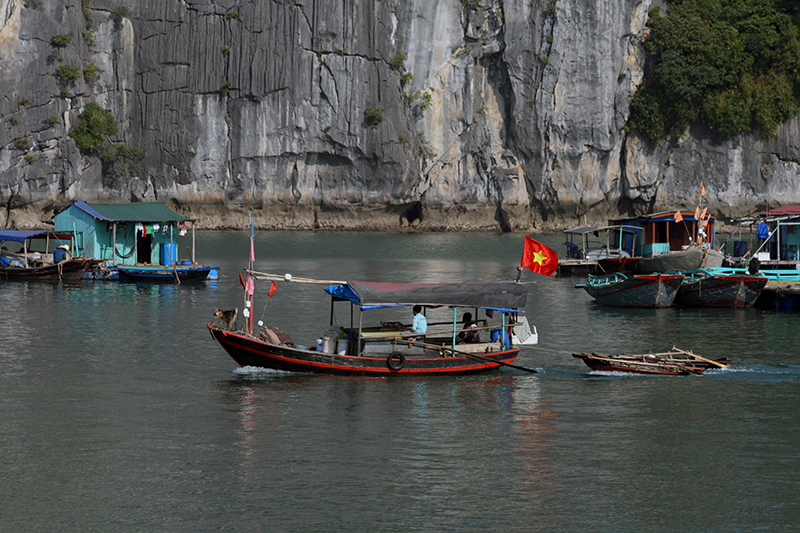
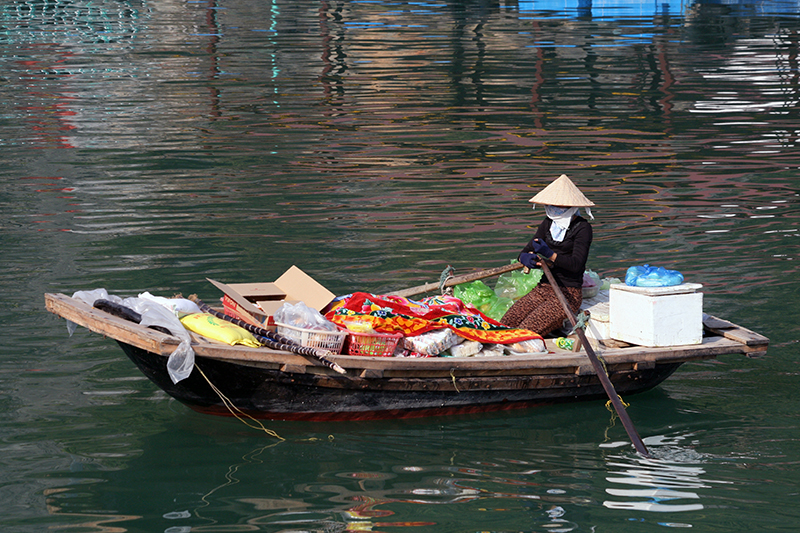
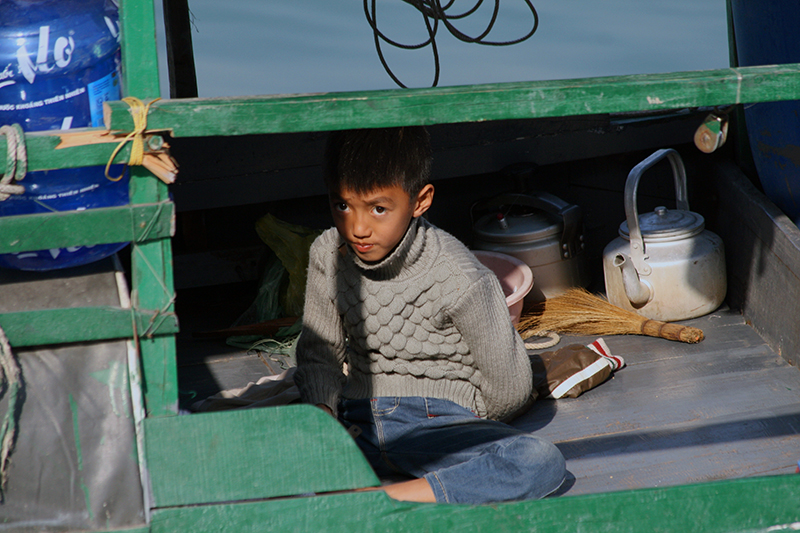
We took a boat tour in the Ha Long Bay in the Gulf of Tonkin.
A UNESCO Heritage Site, civilization in this area dates back 25,000
years.
Fifty years ago, however, this area provided the spark that started
the fire.
The Gulf of Tonkin Incident (or the USS Maddox Incident) is the name
given to two separate confrontations involving North Vietnam and the
United States in the waters of the Gulf of Tonkin.
On August 2, 1964,
the destroyer USS Maddox, while performing a signals intelligence patrol,
engaged three North Vietnamese Navy torpedo boats of the 135th Torpedo
Squadron. A sea battle resulted, in which the Maddox expended over
two hundred and eighty 3-inch and 5-inch shells, and in which four
USN F-8 Crusader jet fighter bombers strafed the torpedo boats. One
US aircraft was damaged, one 14.5 mm round hit the destroyer, three
North Vietnamese torpedo boats were damaged, and four North Vietnamese
sailors were killed and six were wounded; there were no U.S. casualties.
It was originally claimed by the U.S. National Security Agency that
the second Tonkin Gulf incident occurred on August 4, 1964, as another
sea battle, but instead may have involved "Tonkin Ghosts"
(false radar images) and not actual torpedo boat attacks.
The outcome of these two incidents was the passage by Congress of the
Gulf of Tonkin Resolution, which granted President Lyndon B. Johnson
the authority to assist any Southeast Asian country whose government
was considered to be jeopardized by "communist aggression." The
resolution served as Johnson's legal justification for deploying U.S.
conventional forces and the commencement of open warfare against North
Vietnam.
US Defense Secretary Robert McNamara failed to inform US President
Lyndon B. Johnson that the U.S. naval task group commander in the Tonkin
Gulf, Captain John J. Herrick, had changed his mind about the alleged
North Vietnamese torpedo attack on U.S. warships he had reported earlier
that day.
By early afternoon of 4 August, Washington time, Herrick had reported
to the Commander in Chief Pacific in Honolulu that "freak weather
effects" on the ship’s radar had made such an attack questionable.
In fact, Herrick was now saying, in a message sent at 1:27 pm Washington
time, that no North Vietnamese patrol boats had actually been sighted.
Herrick now proposed a "complete evaluation before any further
action taken."
McNamara later testified that he had read the message after his return
to the Pentagon that afternoon. But he did not immediately call Johnson
to tell him that the whole premise of his decision at lunch to approve
McNamara’s recommendation for retaliatory air strikes against North
Vietnam was now highly questionable. Had Johnson been accurately informed
about the Herrick message, he might have demanded fuller information
before proceeding with a broadening of the war. Johnson had fended
off proposals from McNamara and other advisers for a policy of bombing
the North on four separate occasions since becoming President.
In 1965, President Johnson commented privately: "For all I know,
our Navy was shooting at whales out there."
In 1981, Captain Herrick and journalist Robert Scheer re-examined Herrick's
ship's log and determined that the first torpedo report from August
4, which Herrick had maintained had occurred—the "apparent ambush"—was
in fact unfounded.
In the 2003 documentary "The Fog of War", the former Secretary of
Defense Robert S. McNamara admitted that the Aug 4 attack never happened.
|